Selasa, 04 Oktober 2016

Meet the First Men to Fly Over Everest

If you've seen the big Hollywood film Everest that came out last year, you probably heard one of the characters deliver a line about how the team would be climbing at the same altitude as a commercial jetliner. Today, aircraft fly over or around the mountain on a regular basis, and no one thinks twice about it, but back in 1933 that still seemed like an impossible height to take an aircraft, particularly in an age when pressurized cabins were not necessarily the norm just yet. But two daring pilots made that flight, and lived to tell the tale. And they did so in a biplane that is down right ancient when compared to modern aircraft.

Mashable recently posted a story and some great  photos from that epic adventure that was called the Houston Everest Expedition because it was sponsored by a wealthy British philanthropist known as Lady Houston. She put up the money that allowed RAF pilot Douglas Douglas-Hamilton (aka Lord Clydesdale) and Colonel Stewart Blacker to attempt to fly a Westland PV-3 biplane over the top of the world's highest mountain, something that seemed incredibly dangerous at the time.

The two men took off from an airstrip near Purnea, India on the morning of April 3, 1933. They were accompanied by a second aircraft flown by Flight Lieutenant David McIntyre and a photographer named S.R. Bonnett. The second plane was there to record the event for posterity and get some fantastic images of this daring flight. The photographer did not disappoint.

As it turns out, the mission was a test for both pilots and aircraft, as there was indeed no pressurized cabins. The four men who were aboard the two planes had to rely on oxygen masks to keep their wits about them and help them breathe at such an altitude. On top of that, it was rare for any airplane to fly at such heights at that point in history, and the small biplane struggled in the thin air just as much as her crew.

When the two planes approached Everest, high winds caused even more problems, forcing the planes to drop 1500 feet (457 meters). But in the end, they were able to climb back up to 29,029 feet (8848 meters) and pass over the top of the summit for the very first time. All four men were given high accolades with Lord Clydesdale earning the Air Force Cross for his leadership. Bonnett's photos and video footage were also used to create an Academy Award winning film called Wings Over Everest as well. You can watch that film below.

The story of this expedition is an amazing one. Today we take it for granted that we fly at such a height, but back in 1933 it was almost as if they were trying to go to the moon. Fortunately, they proved that aircraft are sturdier than was believed and that man can go to higher heights that was previously believed. It would be 20 years before Edmund Hillary and Tenzing Norgay would actually climb to the summit, but this intrepid crew helped lead the way.


Himalaya Fall 2016: New Report Indicates 90% of Nepali Liaison Officers Never Report to Base Camp

Last week we posted a story about how none of the Nepali liaison officers assigned to Base Camp on Manaslu have reported for duty this year, despite teams paying a fee to cover their expenses and the Ministry of Culture, Tourism, and Civil Aviation requiring them to be there. In all, there are 18 teams on that mountain this fall, and not one of them has seen their "LO" since they left Kathmandu. But now now, a new report from The Himalayan Times indicates that this isn't an isolated incident, and that 90% of all liaison officers never leave the capital or arrive at the mountain they are assigned to cover.

The role of liaison officer is to serve as a communications tool for climbing teams and to monitor activity on the mountains to ensure that everything is done according to regulation and in a safe manner. They are also there to coordinate rescue operations and assist in helping sick or injured climbers getting back to Kathmandu where they can be treated. But most of those duties are falling on the guiding companies, who coordinate those efforts themselves.

Nepali law states that an LO must be assigned to every climbing team heading out to a mountain, and that the liaison officer accompany that team to BC, where they will stay for the duration of the expedition. Unfortunately that isn't happening, despite the fact that teams pay $2000 in fees to pay for the LO's services. That money seems to be getting pocketed, with no real value being added for the climbers in anyway.

With several high profile disasters on Everest and other mountains in recent years, the Nepali government has vowed to make climbing in their country safer. Despite those claims however, there doesn't seem to be any significant strides being made in this area. The fact that after two deadly avalanches on Everest in 2014 and 2015 there still hasn't been a change in operations is quite telling. 80% of the LO's report that they've actually been to the mountains, although records indicate that they have never stepped foot out of Kathmandu.

As far as expedition leaders go, they have found that there is no sense in complaining or calling out a specific LO. If they do, they suddenly find it much more difficult to obtain climbing permits or they are charged fines for minor rules infractions which may or may not actually be true. In other words, if you report on the liaison officers you'll find working in Nepal is a much more difficult proposition than you first imagined.

In Nepal, the job of being a liaison officer carries some level of prestige, and most get appointed to the position as a political favor or after providing some level of service to the Prime Minister or other government officials. Because of the stature of the position, a culture has permeated throughout the LO's that allows them to get away with not doing their jobs, but still collecting the fees paid by climbers. For this to change, the Nepali government is going to have to force them to start following the letter of the law and reporting for duty as expected. Until then, Nepal can talk all it wants about how it is going to improve safety in the mountains. Having good communications and someone who actually does the job they are assigned would be good start.

Senin, 03 Oktober 2016

Video: Skiing the Hardrock 100

The Hardrock 100 is considered one of the toughest ultramarathons on Earth. Held each summer in the San Juan Mountains of Colorado, it challenges endurance athletes to cover 100 very tough miles (160 km) as quickly as they can. It is a difficult trail to run, even in the best of conditions, and no one has ever attempted to cross it in the winter. That is, until now. In this short documentary film we join ultrarunner Jason Schlarb as he attempts that very thing. In brutal conditions he sets off to test himself on the Hardrock trail in January, when swirling winds, deep snow, and cold temperatures are at their worst. Does he make it? You'll just have to watch the video below to find out.

Skiing the Hardrock 100 from Schlarb-Wolf Productions on Vimeo.

Video: Exploring Alaska from Above with Paraglider Paul Guschlbauer

Paul Guschlbauer is an Austrian paraglider who traveled to Alaska – one of the world's last great frontiers – to explore the region from above. What he found there was an epic wilderness that remains remote and untamed, even in the 21st century. Paul flew across this amazing place in a 60-year old airplane, finding beautiful landscapes and amazing adventures along the way. This short video takes us along for the ride, and will leave you wanting more. See Alaska the way the famous bush pilots do, and marvel and just how spectacularly beautiful the state truly is.

Gear Closet: Petzl Reactik+ Headlamp

It seems all of our electronic gadgets are getting smarter these days. First came the smartphone of course, then tablet computers, and smartwatches too. Now, thanks to the the Reactik+ from Petzl, we can add "smart" headlamps to the list too.

What makes the Reactik+ so smart you ask? Well for starters, it comes with Bluetooth wireless technology baked in that allows it to connect to your smartphone and control its functionality using a special MyPetzl mobile app. That app gives users the ability to control the brightness of their lamp yourself, or tell it what type of activity you'll be doing, and for how long, which gives the device the ability to set its own brightness levels based on how much power is lift it is rechargeable battery. The app has preset profiles for sports like trail running, mountaineering, hiking, or simply just hanging out around the campsite. You can also add your own custom profiles as well, allowing you to dial in exactly the performance you need.

At its brightest setting, the Reactik+ can crank out as much as 300 lumens of light, which is plenty for just about anything you want to do outside. On that level, it the headlamp can run for about 2.5 hours, but you can adjust the burn time for 5 or 10 hours as well, and the lamp will automatically regulate itself to achieve that length of time. This ability to extend the life of the Reactik+'s battery comes in handy if you find yourself out on the trail for longer than you expected, or you don't have a handy way to recharge the device while in the field.


The Reactik+ has several different lighting modes to help you navigate through the darkness. For instance, it features a proximity beam that diffuse the light across a wider area, as well as a focused beam that acts as a bright spotlight for when you just need to see as far ahead as possible. Of course, it also comes with a red light mode, which is handy around he campsite when you don't want to burn out the retinas of your friends who are accompany you on your outdoor adventure.

Designed to be tough and weather resistant, I recently put this headlamp to the test on a backpacking trip to Bryce Canyon where the rain was coming down sideways. Despite those poor conditions however, the Reactik+ performed admirably, surviving some of the worst weather that part of the country has seen in years, and continuing to work well. After that experience, I feel confident that this light will work great in just about any weather, with perhaps the exception of extreme cold. Frigid temps can put a strain on the life of the built in rechargeable battery, although this is something that plagues most other headlamps too.

Other features of this headlamp that I really like include a washable headband, which is a must for those of us who live in warm climates and will run with this light on our heads. I also appreciate the ability to lock-out the power source, preventing the lamps from accidentally turning on while in our packs and running down the battery. Petzl has even given the headlamp the ability to use a standard battery pack that employs AA batteries for power instead. This battery pack is sold separately, but it is nice to have the option none the less.

In terms of performance, I love all of the technology that this headlamp brings to the table. It's "smart" features work great, and I appreciate its ability to dial in just the right level of lighting to get me through a long run or a night hike back to camp. The MyPetzl app is simple to use, connects to the Reactik+ quickly and easily, and is versatile enough to allow you to fine tune things to your own liking. My only complaint is that I wish it had Apple Watch support that would allow me to adjust the light's settings on the fly without having to retrieve my iPhone from my pack or wrist strap.

At $109.95, the Petzl Reactik+ is on the expensive side in terms of headlamps. But, if you're an active outdoor athlete who runs, bikes, climbs, or hikes a lot, you may very well appreciate all of the tech features that it brings to the table. As a gadget-nerd myself, I know I certainly do. However, if you're just looking for a very good headlamp that you can take with you on your adventures, the standard Reactik may be a better choice. It performs much the same way as the "+" model, but without the "smart" features. It also sells for $84.95, making it a bit less expensive. Either way, you'll get an excellent headlamp that is comfortable to wear, versatile to use in the field, and very powerful at lighting your way.

Purchase your Reactik+ at REI.com or CampSaver.com.


REACTIK + Bluetooth headlamp with Reactive Lighting Technology from Petzl-sport on Vimeo.

Roald Amundsen's Ship Recovered From the Arctic Ocean

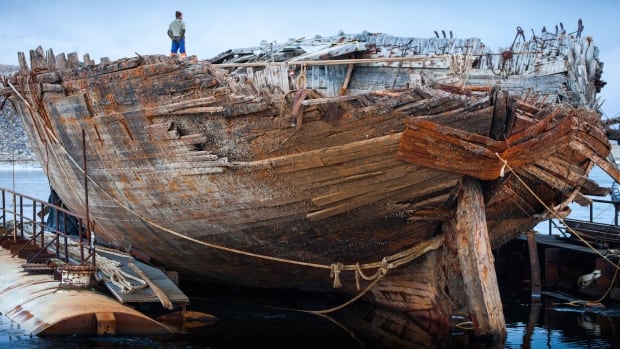
After resting at the bottom of the ocean for more then 85 years, Roald Amundsen's ship the Maud has been brought back to the surface, and is preparing to return to Norway. The ship, which was discovered off the coast of Cambridge Bay in Canada, helped to chart the Northeast Passage from 1918-1920, sunk in those waters back in 1930 after a short, but distinguished career in exploration.

A recovery team has spent the past six years working to bring the ship up from its watery grave. This past July, their efforts finally paid off, as the ship returned to the surface for the first time in more than eight decades. The crew first had to place a series of inflatable ballasts around the hull of the vessel, then slowly add air to them. Eventually this allowed them to place it on a barge and float it into harbor. Over the past two months, they have been been cleaning up the interior of the vessel in preparation for weathering the winter in the Arctic.

The recovery team says that the winter weather will actually help the ship, allowing its wooden hull to dry. This will help to reduce the ship's current weight, and will take some of the pressure off of the hull. That will help to stabilize it for the long journey back home to Norway, which is likely to take place next summer.

According to reports, the ship is in surprisingly good shape. The hull remains solid and strong, despite being at the bottom of the ocean for so long. The vessel was originally built back in 1917, and commissioned by Amundsen to accompany him on his exploration of the icy waters north of Russia. Amundsen is well know for is exploits in the cold places of our planet. He was the first person to reach the South Pole back in 1911, and was instrumental in exploring the Arctic as well, becoming the first person to full pass through the Northwest Passage.

The Maud was sold off in 1925, five years before she sank. But, she is considered an important piece of exploration history, and back home in Norway she'll be preserved for posterity. In that country, Amundsen is incredibly famous, and any relic left over from his expeditions is a valuable commodity.

This is quite a cool story. I'm glad this team was able to locate and recover the ship. Hopefully it makes it through the winter in one piece, and returns home next year as planned.

Himalaya Fall 2016: More Summits on Cho Oyu and Manaslu, a Double Summit, and Death on Shisha

As expected, there was a lot of news out of the Himalaya this past weekend, where good weather allowed a number of teams to summit their respective mountains. It now appears as if most of the commercial teams are winding down their activities, and it has been a very successful couple of days.

We'll start on Manaslu, where The Himalayan Times now reports that 150 climbers summited over a two day period. 100 of those topped out last Friday, while another 50 completed their climbs on Saturday. Amongst them were the Seven Summit Treks team, which has the largest squad on the mountain this autumn. No small feat considered there were 17 total teams there this year. By all accounts, it was a well scheduled and orderly ascent and descent, with most of the teams now back in Base Camp and preparing to head back to Kathmandu.

Over on Cho Oyu we already knew that the Adventure Consultants had topped out at the end of last week, and the IMG team wasn't far behind. They summited yesterday, putting another 19 climbers on top, and bringing the total close to 40 on the Tibetan side of the mountain. The Adventure Consultants are packed and heading out for KTM today, but the IMG squad will likely rest a bit in BC and begin heading for home later this week.


Speaking of Cho Oyu, one climber performed an impressive feat on that mountain this weekend. Australian Rolfe Oostra managed to summit last Friday, then return to the top again the following day, pulling off a rare double-summit of the 6th highest peak on the planet. An experienced mountain guide, Oostra first went up the peak with two of his staff members, then guided two clients up the following day. That is quite a display of strength and fortitude to say the least.

The news wasn't quite so good on Dhaulagiri. After a few days of radio silence, the Altitude Junkies checked in over the weekend to report that they had aborted their summit bid. The plan was to top out on October 1, but once they reached Camp 1 they discovered very deep snow along the route. In fact, it was roughly a meter (3 ft) deep in parts, making it very tough going. The team has now returned to BC and is discussing what to do next. With more snow in the forecast, the expedition could be over without an opportunity to summit. We'll learn more soon.

Finally, some sad news from Shishapangma, where the Times is reporting that a Sherpa named Pemba who was climbing with the RMI team was struck and killed by an avalanche. The accident took place just below Camp 3 on the mountain as the Sherpa team was moving up with gear and supplies. No one else was injured, and all are safely back in BC at the moment. Our condolences to Pemba's friends and family.

That's all for today. More news as it warranted.