Tampilkan postingan dengan label Backpacking. Tampilkan semua postingan

Jumat, 21 Oktober 2016

Gear Closet: Hydrapak Stash Water Bottle

As a frequent traveler, I'm always looking for ways that I can shed weight from my pack without sacrificing functionality. Often that comes from packing more wisely, leaving behind nonessential items, and choosing the proper gear for any given trip. But sometimes those gains can come from discovering an item that is designed for those who like to travel fast and light, but don't want to have to make compromises along the way. The Stash water bottle from Hydrapak is just such a product.

Made from durable and flexible materials, the Stash is a collapsible water bottle designed to shrink down to a highly packable size when not in use. This makes it super easy to stow in your pack until you're ready to use it, at which time it expands back to its full size in a manner of seconds.

I carry the 1-liter version (it is also available in a 750 ml size) of the Stash with me when I hit the road, and I've found it to an excellent traveling companion. It is lightweight (3.1 oz/88 g when empty), and yet still plenty durable enough to survive plenty of use and abuse in the backcountry. My Stash bottle is capable of holding up to 32 oz of water when full, but can reduce down to just 1/5 its normal size when you're ready to tuck it away.

As if that wasn't enough, the bottle can be used to store both hot and cold beverages. It is rated for use at temperatures as high as 140ºF (60ºC) or it can withstand its contents being frozen too. That versatility makes it a great option for the trail or campsite, allowing you to take it anywhere you want to go, and still stay hydrated along the way.

The 1-liter version comes with a wide-mouth (63 mm) cap that makes it extremely easy to drink from. That cap has also been designed to fit most backcountry water filters too, allowing the Stash to be refilled directly from a stream or lake. That same opening comes in handy when you're pouring water out as well, for instance when you're filling a pot to boil water for dinner.


Made from 100% BPA and PVC free materials, the Stash is perfectly safe to drink from. It also doesn't absorb the flavor of liquids other than water either. On occasion, I like to fill the bottle up with water and add a couple of nuun tablets, but after rinsing the bottle out the taste from those tablets usually disappears. You will have to occasionally wash the bottle out however, which is another time when the wide-mouth opening comes in handy.

I have been carrying this bottle with me on numerous trips over the past year, and have come to truly rely on it. I love that it weighs less than half that of a hardshell bottle, and that it compresses down to such a small size. It also draws a lot of attention from fellow travelers and guides, all of whom comment on what a clever and useful product it is. Most want to add it to their own gear collection once they head home.

If I have a criticism of the Stash it is that it often takes two hands to drink from it properly. Because it is a flexible bottle, it will start to bend out from the weight of the liquid inside as you start to empty it.  Other bottles will allow you to drink with one hand, as their hard shells prevent this from happening. For me, it is a small price to pay for the other conveniences it brings however, but it is worth pointing out nonetheless.

Speaking of small prices to pay, the Stash bottle is incredibly affordable too. Priced at just $22.99 for the 1-liter version, and $17.99 for the 750 ml model, this is an inexpensive option for adventure travelers, backpackers, and campers alike. It also makes a great stocking stuffer gift for the holidays too, as just about any outdoor enthusiast would love to receive this bottle. It's even available in five different colors.

Versatile, durable, affordable, and just downright cool. The Hydrapak Stash is one of my favorite pieces of gear that I've used in a long, long time.

Buy it at REI.com, CampSaver, or Backwoods.

Kamis, 20 Oktober 2016

Gear Closet: First Look at Upcoming Gear From REI

 A few weeks back I was lucky enough to be invited on a trip to Bryce Canyon where I would be treated to an early look at some new outdoor gear coming our way courtesy of REI. Typically, Bryce is a dry, warm place that is perfect for hiking and backpacking, but on our trip it turned out to be pretty much the exact opposite. The weather mixed in a little of everything, including sun, rain, sleet, hail, heavy rain, high winds, mud, snow, and yet more rain. And just to make things more interesting, there were even tornadoes and flash floods in the area too. In other words, it was the perfect conditions to test out new gear, even if the team wasn't especially comfortable, warm, and dry at all times. 

Over the course of a couple of days, I was able to test out some great new products and learn about them from the team that is designing them. There is a bit of a revolution going on right now inside REI, which has always made its own brand of packs, tents, sleeping bags, and apparel. But in the past, those products were generally seen as more affordable options when the bigger outdoor brands are out of your price range. Now how, those same items are all going through a dramatic redesign that will turn them into premium products that you'll want to carry with you on your outdoor adventures. They are being built to compete on the same level as The North Face, Mountain Hardwear, and the other brands we've come to know and trust. This is a big step for REI, which will still offer these items at a very attractive price, but the performance of all of the gear is being fine tuned to be much better than in the past.

Most of these new items are scheduled for release in the spring of 2017, so if you're in the market for any of these pieces of gear, you'll have to be a bit patient. But, I can tell you that they are all worth the wait, and you won't be disappointed. They should all arrive in REI stores in time for next year's camping, hiking, and backpacking season. Best of all, company reps tell me they're also working on travel gear too, which means we should see some amazing things in the category in the future too.

Here's a sampling of what I saw:

Flash 45 Backpack
Built for traveling light – but not ultralight – this 45-liter pack is super comfortable, offers plenty of capacity, and is capable of carrying heavy loads over longer distance. I should know, as I tested this bag in Bryce Canyon under challenging conditions for two days carrying quite a bit of gear along with me. The pack includes REI's proprietary UpLift system, which allows you to dial in a great fit for the load you're carrying and your body type. It also has a nicely padded 3D contoured hipbelt, and a number of strategically placed pockets for stashing small items you want to keep close at hand. Best of all however, are the two water bottle pockets that can be easily accessed without ever having to take the pack off.

Quarter Dome Tents
REI's Quarter Dome tents get a revamp for spring 2017 as well, and they are looking great. Available in solo, 2-person, and 3-person models, these shelters are lightweight, tough, and incredibly easy to assemble. They feature color-coded poles that make it a breeze to set-up, even in bad weather. The included rainfly helps to keep moisture at bay, as does an optional footprint, and the tents are roomy, offer plenty of ventilation, and are strong enough to withstand high winds. They also have wider doors for easier entry and exit, more vestibule space, a wider foot box, and reflective guy lines to prevent you from tripping over them in the dark. The new models will all be slightly heavier than the previous generation, but the overall improvements make them much nicer to use in the backcountry.

Magma 10 Sleeping Bag
If you're going to test out a new sleeping bag, you should probably do it in cold, damp conditions. That's exactly what the new Magma 10 bag faced in Bryce Canyon, and it easily passed with flying colors. This mummy-style bag is very comfortable and warm, with an easy to use zipper and options for ventilating the lower section of the bag while staying cosy up top. The Magma features 850-fill hydrophobic down, which means it can repel quite a bit of moisture and still continue to hold its loft and perform at a high level. REI's team told me this sleeping bag is officially rated for 10ºF, which ought to be enough to keep you cosy on most of your camping adventures.

Flash Insulated Air Sleeping Pad
One of my favorite new pieces of gear in the REI line-up is the Flash Insulated Air sleeping pad. Not only does it inflate and deflate incredibly quickly, it also compresses down to an incredibly small size.  This makes it an instant replacement for my older – and much bulkier – sleeping pad that I typically use on backpacking trips. The fact that it also provides a surprisingly high level of comfort, while being so light and thin, is just icing on the cake. I think you're going to like this one a lot too.

Magma 850 Down Jacket
Like the Magma sleeping bag, this jacket also uses 850-fill hydrophobic down. It features a nice athletic cut that hugs the body nicely, helping it to perform well in cold weather. I appreciated the fact that his is a puffy that isn't especially bulky, make it highly packable for travel. The Magma jacket happens to look great too, making it a nice option for the trail or for use around town.

Flash Carbon Trekking Poles
I'm a big proponent of using trekking poles on long distance hikes. I think they save a lot of wear and tear on your hips and joints, and help to keep your legs fresh for the long haul. REI's latest models are super lightweight, easy to pack, and durable enough to survive the difficult conditions we tested them in Bryce Canyon, where the mud was thick and we walked 9+ miles (14 km) each day, with more than 1800 feet (548 meters) of vertical gain. Through it all, the poles performed admirably, and were much appreciated by all. When they hit stores next spring, they will be a very affordable alternative to some of the competing brands we've used in the past.

Performance Apparel
In addition to all of the gear listed above, we also tested out lots of new clothing coming from REI as well. Those items included performance shirts, hiking pants and shorts, jackets, base layers, and more. All of the items looked great, fit comfortable, and performed extremely well, even in the poor weather conditions. If this sampling of clothing accurately represents what REI has in the pipeline, you can expect to not only hike, camp, and backpack more comfortably, but travel well too. There were several pieces – including the Screeline Half-Zip Top and Screeline Pants – that I came away thoroughly impressed by, and will be happy to have them in my wardrobe for future adventures.

This is just a small taste of what REI has in the works. Next spring, you'll definitely want to drop by their retail outlets to check these items out in person. I'm already a big fan of the Flash 45 backpack and Flash Air sleeping pad, but the other items are wonderful as well. If this trend continues, the REI Private Brands collection will be competing quite nicely with some of the other big outdoor brands, and we consumers will benefit greatly.


Senin, 03 Oktober 2016

Gear Closet: Petzl Reactik+ Headlamp

It seems all of our electronic gadgets are getting smarter these days. First came the smartphone of course, then tablet computers, and smartwatches too. Now, thanks to the the Reactik+ from Petzl, we can add "smart" headlamps to the list too.

What makes the Reactik+ so smart you ask? Well for starters, it comes with Bluetooth wireless technology baked in that allows it to connect to your smartphone and control its functionality using a special MyPetzl mobile app. That app gives users the ability to control the brightness of their lamp yourself, or tell it what type of activity you'll be doing, and for how long, which gives the device the ability to set its own brightness levels based on how much power is lift it is rechargeable battery. The app has preset profiles for sports like trail running, mountaineering, hiking, or simply just hanging out around the campsite. You can also add your own custom profiles as well, allowing you to dial in exactly the performance you need.

At its brightest setting, the Reactik+ can crank out as much as 300 lumens of light, which is plenty for just about anything you want to do outside. On that level, it the headlamp can run for about 2.5 hours, but you can adjust the burn time for 5 or 10 hours as well, and the lamp will automatically regulate itself to achieve that length of time. This ability to extend the life of the Reactik+'s battery comes in handy if you find yourself out on the trail for longer than you expected, or you don't have a handy way to recharge the device while in the field.


The Reactik+ has several different lighting modes to help you navigate through the darkness. For instance, it features a proximity beam that diffuse the light across a wider area, as well as a focused beam that acts as a bright spotlight for when you just need to see as far ahead as possible. Of course, it also comes with a red light mode, which is handy around he campsite when you don't want to burn out the retinas of your friends who are accompany you on your outdoor adventure.

Designed to be tough and weather resistant, I recently put this headlamp to the test on a backpacking trip to Bryce Canyon where the rain was coming down sideways. Despite those poor conditions however, the Reactik+ performed admirably, surviving some of the worst weather that part of the country has seen in years, and continuing to work well. After that experience, I feel confident that this light will work great in just about any weather, with perhaps the exception of extreme cold. Frigid temps can put a strain on the life of the built in rechargeable battery, although this is something that plagues most other headlamps too.

Other features of this headlamp that I really like include a washable headband, which is a must for those of us who live in warm climates and will run with this light on our heads. I also appreciate the ability to lock-out the power source, preventing the lamps from accidentally turning on while in our packs and running down the battery. Petzl has even given the headlamp the ability to use a standard battery pack that employs AA batteries for power instead. This battery pack is sold separately, but it is nice to have the option none the less.

In terms of performance, I love all of the technology that this headlamp brings to the table. It's "smart" features work great, and I appreciate its ability to dial in just the right level of lighting to get me through a long run or a night hike back to camp. The MyPetzl app is simple to use, connects to the Reactik+ quickly and easily, and is versatile enough to allow you to fine tune things to your own liking. My only complaint is that I wish it had Apple Watch support that would allow me to adjust the light's settings on the fly without having to retrieve my iPhone from my pack or wrist strap.

At $109.95, the Petzl Reactik+ is on the expensive side in terms of headlamps. But, if you're an active outdoor athlete who runs, bikes, climbs, or hikes a lot, you may very well appreciate all of the tech features that it brings to the table. As a gadget-nerd myself, I know I certainly do. However, if you're just looking for a very good headlamp that you can take with you on your adventures, the standard Reactik may be a better choice. It performs much the same way as the "+" model, but without the "smart" features. It also sells for $84.95, making it a bit less expensive. Either way, you'll get an excellent headlamp that is comfortable to wear, versatile to use in the field, and very powerful at lighting your way.

Purchase your Reactik+ at REI.com or CampSaver.com.


REACTIK + Bluetooth headlamp with Reactive Lighting Technology from Petzl-sport on Vimeo.

Jumat, 30 September 2016

Gear Closet: Gear Aid Flux LED Light and Power Station

When I traveled to the 2016 Outdoor Retailer convention in Salt Lake City this past summer I had the opportunity to meet with a number of companies who are making great gear for use in our outdoor pursuits. As usual, there were a number of trends that shone through, including gear getting lighter, more eco-friendly, and improving performance in inclement weather. But, there was also another trend that was easy to notice with numerous gear manufacturers putting an emphasis on better lighting solutions for use around our campsites. In the weeks ahead, you're going to see some of these products begin to make their way onto the market, and several of them are truly going to revolutionize the way we illuminate the campgrounds. The first of these to cross my desk is an incredibly bright and powerful LED lantern from a company called Gear Aid, whose new Flux light will prove very handy in a wide variety of situations.

The first thing you'll notice about the Flux is that it is extremely rugged and durable. Gear Aid spared no expense in creating a light that can survive in just about any environment, including a campsite, warehouse, or garage. Housed in a tough plastic suit of armor, my test unit has survived several serious drops onto a variety of hard surfaces, and has come away without nary a scratch. On top of that, the Flux is also water resistant, which means you should have a bright source of light no matter the weather conditions.

Did I mention that this lantern was bright? With 82 individual LEDs onboard, it can crank out as much as 640 lumens of light on its highest setting. At that level of brightness, the Flux's built-in rechargeable battery – which is rated at a whopping 20,800 mAh – can power the light for up to 13 hours. Turn it down to a much more modest 20 lumens – the Flux's lowest setting – and the burn time increases to an impressive 192 hours. That should be enough to get you through just about any camp outing. And since it has 10 brightness settings, and three color temperatures, you'll always be able to find just the right lighting for to meet your needs.


That massive rechargeable lithium-ion battery can be put to other uses too however. The Flux comes equipped with 1.5-amp USB port that can be used to power-up your electronic devices, including smartphones, tablets, cameras, headlamps, and other gadgets. In fact, the Flux can recharge your iPhone 10 times over, and still have some juice left to power the light.

To add yet another level of versatility to this lantern, Gear Aid has created a series of mounts that allow you use the Flux in a number of different settings. For instance, I tested a magnetic mount that comes in hand when you need to attach the lantern to a car for instance, while a claw mount clips to a pole or similarly shaped attachment. The Flux also comes with a handy built-in kickstand, and a special adapter that is sold separately allows it to work with any GoPro mounts as well.

As if that wasn't enough, the Flux has a couple of other nice tricks up its sleeve. For instance, it can be set to SOS mode to signal for help should you find yourself in trouble in the backcountry, and it ships with a hanging hook and diffuser bag for use inside a tent too. In short, it seems Gear Aid has considered just about everything when designing this lantern.

The Flux doesn't come without a few compromises however, the biggest of which is its size. It is a burly beast when compared to some other camp lights on the market, and those amongst us who count every ounce will likely want to pass on this option. It does take up a considerable amount of room in your pack, and adds some weight too. That will make some hesitate when carrying it into the backcountry, although if you don't mind a slightly heavier load, it does deliver a lot of functionality.

Personally, I like the Flux a lot because it can be used in so many different ways. Yes, it is great to have at a campsite, as it can obviously light up a large space with ease. It is also nice to have a portable power generator to keep electronic devices working too. But, this light is also really handy for working in the garage or basement too, especially if light is at a premium.

The Flux is just one lighting option in a new series of lanterns from Gear Aid. It's siblings, the ARC and Spark offer similar performance in smaller and lighter packages, with the trade-off being lower brightness and less burn time due to smaller batteries. If you like what you see in the Flux, but would like something smaller and lighter, one of those options just might fit the bill instead.

Priced at $149.95, the Flux is very competitively priced, particularly when you consider everything that it brings to the table. It is bright, extremely durable, water resistant, and has great battery life. It can also recharge your other electronic devices and thanks to a clever mounting system, it can be used in a wide variety of ways. If you're in need of a good lamp around the campsite or elsewhere, this is a worthy option to consider. In terms of pure, raw performance, it is tough to beat the Flux right now.

Kamis, 29 September 2016

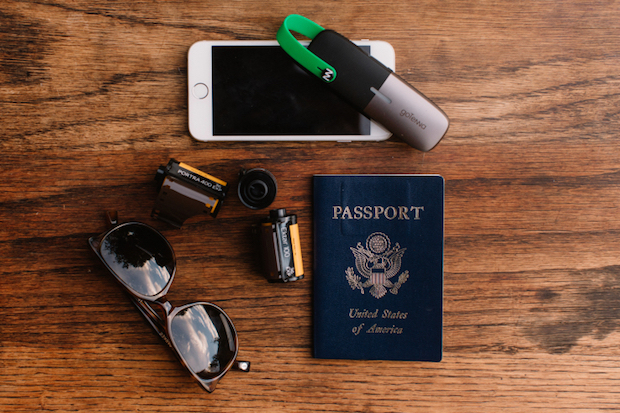
Adventure Tech: goTenna Extends Backcountry Communication with New goTenna Mesh

Earlier in the year I took a look at an innovative method for staying in communication while in the backcountry called goTenna. This simple, but effective device, connects to your smartphone via Bluetooth technology, and allows you to send text messages and share your GPS location with others who are equipped with a goTenna of their own. In a sense, the device creates its own data network for use in places where shell service is nonexistent, and while it doesn't facilitate voice comms, I found it very useful for staying in touch nonetheless. Now, the team at goTenna is back with a new product, and while it works in much the same way as its predecessor, it has the potential to extend the range of the device much, much further.

Dubbed the goTenna Mesh, this new unit launched on Kickstarter yesterday. A bit smaller than the original model, this new device brings some interesting new technologies to the table that should make it more useful to travelers, backpackers, climbers, and other outdoor enthusiasts. For instance, the Mesh now operates on UHF radio frequencies, which have brought it's out-of-the-box range down slightly, but make it more adaptable to a wider variety of environments, including both the outdoors and interior spaces. Switching to UHF has also allowed goTenna to bring their product abroad too, opening it up for sale in foreign countries where the previous generation's VHF radio waves were not allowed.

But more importantly, as it's name implies, the goTenna Mesh brings "meshing" technology to users as well. This allows the device to relay data that is sent to it on to other users, thereby extending the range almost indefinitely. Where as the original goTenna simply blasted out the messages that it broadcasted to all other goTenna users in range, the Mesh can analyze the data, and then rebroadcast it to others too. In this way a message that is sent can potentially reach a recipient, even if they weren't in range of the original sender.


The first generation goTenna has a range of about 1 mile in urban settings and 4 miles in rural areas, although greater ranges can be achieved depending on elevation and so on. The goTenna Mesh has a similar range when used for peer-to-peer communications, with 1 mile in cities and 3 miles in the backcountry. But, since it has the ability to relay data, a message can hop from one device to the next, provide there are several of them working within range of one another. So while two Mesh devices might have a range of roughly three miles, three or four units working together could stretch that range considerably further.

When goTenna launched the Kickstarter campaign for the new Mesh model it was with the hopes that it would generate $150,000 in crowdfunding to help get the device into production. Just 24 hours later, the campaign has generated $132,000 and climbing. That means that the new product should begin shipping in December as expected, with a price tag of $179 for two units. Of course, a third goTenna Mesh is really needed to see the true benefits of this second generation model, but this is certainly a good start. Early-bird contributors can reserve their goTenna Mesh units for as little as $129 by pledging to support the Kickstarter campaign now however.

In addition to revealing the Mesh, the company is also launching a new service called goTenna Plus. Users who sign up for this plan receive additional benefits from the goTenna app that is installed on their iPhone or Android device, including improved topographic maps for sharing your location, tracking of speed and distance while out hiking, and even sharing your current location with a designated individual on a set schedule, much like a SPOT Satellite Messenger. goTenna Plus users can also take advantage of network relaying which allows a device that is connected to a cell network to pass along goTenna messages to other users in that way too.

goTenna Plus is normally priced at $29 for a year, but is currently available at an introductory price of just $10. Seems like a pretty reasonable rate to me.

Find out more about goTenna and all of its gadgets at goTenna.com.


Senin, 26 September 2016

Gear Closet: Merrell Capra Venture Hiking Boots

As many of you know, last week I traveled to Bryce Canyon in Utah to test out a bunch of new gear from my friends at REI. I knew that while I was out there we would be backpacking through remote sections of the national park and camping in the wild. I saw that as the perfect opportunity to try out some new hiking boots as well, thinking that a couple of days on the trail would make the perfect testing grounds. Turns out the weather we encountered in Bryce was wild too, ranging from light rain to heavy downpours, followed by hail, gale-force winds, flash floods, tornadoes, and the occasional bout of sunshine. In short, it was exactly the kind of weather you need to see just how good your gear truly is. Thankfully, I made a good decision when it came to footwear.

For this trip, my boot of choice was the new Capra Venture from Merrell. These lightweight and very comfortable boots are a new addition to the company's line-up this fall, and being a big fan of the footwear that Merrell produces, I was eager to see how well they performed on what was expected to be a challenging, but dry, hiking trail in Bryce. It was far from that however, and over the course of two days of backpacking, we encountered conditions that would test the resolve of any boot. Thankfully, the Capra Venture met that challenge nicely, and kept my feet well protected the entire time.

This boot features a couple of new components to the outdoor industry that I was looking forward to putting to the test. Those included the new Gore-Tex Surround materials and the Vibram Megagrip outsole. Gore-Tex Surrounded as been specifically designed to create a more breathable, yet still waterproof, boot that can be worn in warmer environments. That's exactly what I had in mind when I chose it to take with me to Bryce Canyon, but due to heavy rains and cooler temperatures, my Capra Ventures were forced to deal with far more water and moisture than anticipated.

So how did they hold up? Very well for the most part. The shoes kept my feet warm and dry for the bulk of the trip, which included crossing through swollen streams, walking in lots of mud, and hiking in incessant rainstorms. Late in the afternoon on our first day out in Bryce my feed did start to get a little damp, but considering the amount of moisture we were facing on the trail this was more of a case of the boots soaking out, and possibly getting some moisture in over the top from y saturated shell pants, more than anything else. Either way, it wasn't a great deal of water that made its way inside of the boots, but it was worth noting nonetheless.


In terms of traction, the Vibram Megagrip performed extremely well too. Walking on slick trails throughout both days in the park, I was able to keep my footing without too much trouble at all. That is to say, when the outsoles had a chance to actually grip the ground. There was so much mud collecting on the bottom of the boots that it was difficult to keep them clean. This happened to everyone on the trip, no matter what type of boots they were wearing at the time. But when the soles of the Capra Venture actually touched the surface of the ground, they held firm and reliably, instilling a great deal of confidence in the guy wearing them.

Aside from these two new innovations, Merrell has brought a great deal of other design elements that I appreciated greatly. For instance, the boot has a nice low profile that looks good and feels very comfortable on your feet. It also happens to be fairly lightweight when you consider the level of protection it brings to the table. While the ultralight backpacking crowd are sure to prefer something else, those of us who would rather hike in boots will certainly enjoy the lack of bulk and weight here. Best of all, Merrell has still built the shoe to provide plenty of protection and cushioning, as at the end of the day my feet and legs still felt strong and ready to go.

Built with a bellows tongue to help keep debris out of the interior of the boot, the Capra Venture also comes a nicely molded footbed to provide comfort and support. As a result, these boots were comfortable on my feet immediately and required a very minimal amount of break-in time before they were ready to go. I experienced no hotspots, blisters, or abrasions after two hard days on the trail, and thankfully I didn't end up getting any mud, dirt, rocks, or any other unwanted debris inside the shoe. At the end of the trek, my feet were in just as good of condition as they were went they set out, which is about all you can ask for out of a pair of boots.

In terms of durability, the Capra Venture once again impresses. I wouldn't expect a boot to show much wear and tear after just a couple of days on the trail, but my pair was put through the wringer and still managed to come out looking practically brand new. That is, after I hosed off all of the mud and dirt that had accumulated along just about every surface. Once cleaned and dry, I was hard pressed to be able to tell that they had not been just taken out of the box, despite miles of hiking in poor weather conditions.

If you're in the market for a new pair of backpacking or trekking boots, and you're looking for something that can provide plenty of protection without a lot of weight, the Merrell Capra Venture is a great choice. It not only comes packed with the latest fabrics from Gore and a new outsole from Vibram, it has decades of Merrell's heritage behind its design too. The result is a boot that is meant for those of us who hike longer distances while carrying a sizable load in in our backpacks. On the Bryce Canyon trip my pack was stuffed with all kinds of gear, including a new three-person tent that I was carrying by myself, but these boots still kept me fresh, moving fast, and feeling strong.

Priced at $230, the Capra Venture is about inline with what I would expect to pay for a very good backpacking boot. The fact that they are so lightweight and comfortable however puts them in a bit of a class all their own, and in my eyes makes them well worth the cost for someone who needs this level of performance. This isn't a boot designed for a short hike on a perfectly groomed trail on a Saturday morning – although it would do just fine in that environment. Instead, this is outdoor footwear built for adventures in rough and tumble places. It's meant for hiking longer distances and for trekking in remote places. If that's where you find yourself heading on a regular basis, the Capra Venture is definitely a boot for you.


Senin, 19 September 2016

On the Road Again - Backpacking Bryce Canyon


It seems I've been home for an all-too-brief stay, but its time to go on the road again. This time, I'm headed for Bryce Canyon National Park in Utah where I'll be backpacking for the rest of the week with the fine folks at REI Adventures. This trip was actually organized by the REI retail team, so over the next few days I'll be joining some other outdoor writers in testing some of the latest and greatest gear from that company.  That means I'll be off the gird for the rest of the week, with no updates to The Adventure Blog in the meantime. But, I should be back at it next week. In the meantime, I'm looking forward to seeing Bryce, a national park I haven't visited yet. I'm sure I'll have a story or two to share from the experience as well.

Selasa, 13 September 2016

Backpacker Gives Us America's 10 Most Dangerous Hikes

When most of us decide to go for a hike we generally tend to hit local trails that are scenic, fun, and even relaxing. But not all trails fit that description, with many being down right difficult and demanding. Then of course, there are the ones that are actually quite dangerous.

That's the subject of a great article put together by Backpacker magazine, which takes a look at the 10 most dangerous hikes in the U.S. The list contains some iconic treks across the country, as well as some lesser known trails that have a reputation for being incredibly difficult. In fact, if you go unprepared on these hikes, you could get seriously hurt or even killed.

Some of the hikes that make the list include Bright Angle Trail in the Grand Canyon, which is known for being a challenging walk in hot conditions the often leaves those who aren't prepared dehydrated and exhausted. The Maze in Utah on the other hand will confound even the most navigationally savvy, while the infamous Mt. Washington in New Hampshire blasts hikers with its high winds, which tend to blow furiously all year round.

I won't give away the entire list, as the article is well worth a read by everyone. I will say however, that each of the entires definitely has an element of danger to it, which could cost the inexperienced and unwary their lives. Thankfully, Backpacker has some suggestions on how to avoid these challenges, and survive each of these beautiful but difficult hikes.

Check out the entire list here.