One of the hottest trends in cycling over the past couple of years has been the rise in prominence of the electric bike – more commonly known as the e-bike. At first glance, most of these bikes look like just about any other that you might encounter on the road, although they have a hidden secret. They come equipped with a battery-powered motor that can help you maintain higher speeds with less effort or climb tough hills that would normally leave your legs crying out in agony.
This little speed-boost has made e-bikes especially popular with commuters, many of whom find that the onboard motor helps them travel along with traffic better and allows them to arrive at their destination relatively fresh thanks to not having to exert as much energy.
An avid biker myself, I've been intrigued with e-bikes for some time, but hadn't gotten the chance to try one out for myself. That changed recently when Haibike sent me one of their electric assisted mountain bikes to take for a spin, and I have to say I came away impressed. The bike delivered on everything that was promised – and more – allowing me to power through a ride like never before. But in the end, it also left me reevaluating why I like mountain biking so much in the first place.
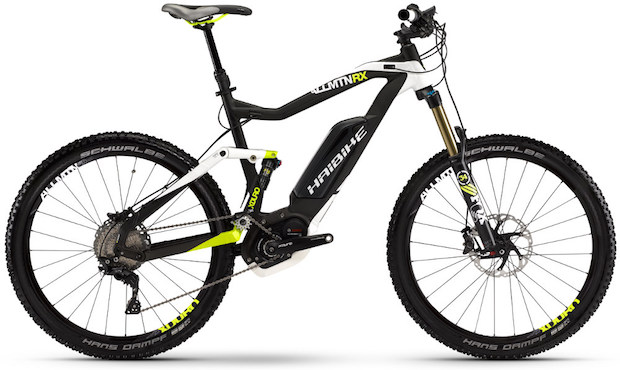
For my little e-bike test drive, Haibike sent me a 2015 model known as the Xduro AllMtn RX. The current model that fits pretty much the same specs is the Xduro AllMtn 7.0. Both versions sport Shimano components, 27.5" tires, a full-supsenion, and a slick looking design that looks aggressive and fun to ride. Hidden inside the aluminum frame however, is a 36-volt motor that is powered by a 500 Wh battery that help this bike truly stand out from the crowd.
Before we go too far into this review, it is important to point out that while most e-bikes provide an electric assist, but you still have to do all of the pedaling. You simply don't have to pedal quite so hard in order to get the bike up to speed nor to maintain that speed. Likewise, when climbing a hill, the speed-assist kicks in to lend a hand, making it surprisingly easy to shoot up steep grades, although you still have to put in some work to get to the top.
The motor installed on this bike has five different settings, including Eco, Tour, Sport, and Turbo, as well as off. Yes, you can ride the bike without any type of electrical assist, but since it tips the scales at 49.2 pounds, it does feel a bit slow and ponderous. Eco mode provides the least level of assistance, which doesn't feel like much, although it is there to lend a hand when you need it. Turbo is bit like strapping a rocket to your bike, although it comes at dramatically reduced battery life.
While testing the Xduro, I only switched over to the highest level when tackling a big hill, otherwise I tended to stay in Tour mode most of the time. This allowed me to easily maintain a good rate of speed over a variety of terrains without having to expend a lot of energy in the process. The result was that at the end of my ride, I still felt like I had a good workout, but I wasn't completely wasted, even after riding a tough trail.
The Xduro AllMtn has a built in cycling computer mounted on its handlebars that provides information such as your current speed and time, as well as offering a trip odometer, and life-time odometer all in a digital format. That same display also provides constant updates of how much battery life remains by showing not only a battery indicator but also the amount of range the bike has before it runs out of juice. The screen also has an icon that indicates which level of power that the motor is set too as well.
Getting on the bike for the first time, I was unsure exactly how things worked. The motor was engaged, but there is no throttle that you can control, so I wasn't exactly sure how I'd know if it was working properly. It only took a second to figure that out however, as when I started to pedal you could feel the electric assist kick in with a very noticeable boost, even in Eco mode. That boost only became more noticeable as increased the level of power generated by the motor.
Before too long, I found myself testing the bike to see what it could do in a variety of different conditions, and for the most part it performed very well. It wasn't quite as agile and responsive as my Trek mountain bike back home, then again that bike doesn't power up big hills as easily either. I have to admit, the Xduro AllMtn is fun to ride, and is quite capable of tackling a wide variety of trails types.
Now, all of that said, I have to say that I have a few reservations about this e-bike as well. For starters, it is a heavy beast. As mentioned, it is nearly 50 pounds (22.68 kg), which makes it more than twice as heavy as my normal ride. That added weight becomes more evident on tougher trails where agility can be an important factor. And heaven forbid you should run out of battery power while riding, as it would definitely be quite a workout to get Xduro back to the trailhead without the electric assist.
Despite how much fun I had riding the bike, I also couldn't help but feel like I was cheating a bit out on the trail. Part of the allure of mountain biking for me is taking on the challenges of the route with just my bike. That includes all of the challenges, such as climbing hills and maintaining a good speed. This bike made that so easy to do that it almost felt like an entirely different sport. At the end of my test run, I came to the conclusion that while I wouldn't mind an e-bike for commuting around town, I'm not sure I want one to replace my mountain bike.
That said, for riders who are a little older, or aren't quite as physically fit, the Xduro AllMtn is a good solution that allows them to ride challenging trails much more easily. I can definitely see the allure of this bike under those circumstances.
Durable and well-built, the Haibike Xduro AllMtn 7.0 is competitively priced at $5299. It has quality parts and components at every important spot, and a tough aluminum frame with solid geometry. It also happens to have a secret weapon hidden away in the form of an electric motor. All of that design and technology doesn't come cheap, although I've seen plenty of standard mountain bikes that fall in the same price range, even without a motor. Of course, those bikes are likely to have even better components and a carbon frame, just to put things in perspective.
If you've been considering an e-bike for your mountain biking needs, I'd certainly encourage you to give the Haibike Xduro AllMtn a look. It is a great machine for the right rider. I'm just not sure if that rider is me.
Find out more at Haibike.com.
Tampilkan postingan dengan label Technology. Tampilkan semua postingan
Rabu, 26 Oktober 2016
Rabu, 19 Oktober 2016
Gear Closet: Catalyst iPhone 6/6S Waterproof Case
Okay, I'll admit it. For a very long time I was very resistant to putting a case on my iPhone. I always appreciated the sleek, thin lines that Apple had designed for the device, and adding a case usually changed that aesthetic drastically. On top of that, most cases I saw added weight and bulk that took away from the look and feel of the phone too. And some of the cases designed for use in the outdoors ended up impacting sound quality and ease of use as well. So, as a result, my iPhone went unprotected for years, and usually when I traveled to a remote location, I'd end up leaving it at home or somewhere safe where it couldn't be harmed.
But, as the speed and functionality of the device increased, and the camera continued to improve year in and year out, I've now started taking my iPhone with me pretty much everywhere. It serves as my mobile command center, allowing me to take notes, share images and impressions of the place I visit, snap amazing photos, keep in contact with friends and family, and navigate foreign cities with ease. And since the device is now a constant companion during my adventures, I found that I needed a case to help protect it from the elements too. Finding the right one however, took some time and plenty of trial and error. But finally, I've found what just might be the perfect match for my particular needs in the form of the Catalyst Case for iPhone 6S.
As mentioned, one of the things I have always disliked about most iPhone cases is that they change the look of the device, and add a lot of bulk as well. This is especially true of a case that has been designed for use in the outdoors, which typically brings a measure of protection from dust, accidental drops, and water. The Catalyst Case does all of that, but manages to do so without turning your elegant-looking device into a massive brick. That's because it has been unique designed to provide a high level of protection with the most minimal amount of material necessary. In fact, it is easily the thinnest and lightest protective armor I have ever seen for a smartphone.
That doesn't mean that Catalyst skimped on the specs however. This case can keep your iPhone safe from water down to a depth of 5 meters (16.4 ft). It is also dust, sand, and snow proof, and is rated to survive a drop of 2 meters (6.6 ft) onto a hard surface. In other words, it was built for use in rugged, demanding environments, and should be able to keep our precious devices from suffering an untimely demise.
The case is also comfortable to hold and provides users with a firm grip at all times, which makes it far less likely that the phone will slip out of your hand in the first place. It also comes with external buttons that allow you to adjust volume and power the device on and off as easily as you could without any type of case at all. At Catalyst has even integrated a special rotating crown that allows you to flip the mute switch just as easily as well. The case allows full access to the camera and flash, and even the Touch ID fingerprint scanner functions normally too. In short, once this suit of armor is in place, you won't lose any of your normal functionality.
Installing the case on your iPhone is about as easy as it could possibly be. Everything snaps precisely into place, and fits as snugly as you would expect. It took me just a couple of minutes to take the product out of its packaging and have it installed on my smartphone, which is not something that I can say about some of the competing products that I've tested over the years. Best of all, the case comes off easily too, for those of you who only want to use it when absolutely necessary.
One of the issues with many cases like this one is that the thick armor that is installed ends up having a detrimental effect on the sound quality from both the microphone and speaker of the device that it is installed upon. This can make it difficult for you to hear the person you're talking on the phone with, and it can muffle your voice for them too. Thankfully, that isn't the case here, as Catalyst has found a way to deliver a high level of protection without interfering with audio performance in any way.
Inside the box you'll find a couple of additional items that could come in handy. For instance, Catalyst includes a special adapter that allows headphone users to more easily access the standard 3.5mm audio jack. This port may be gone from the new iPhone 7, but it is still in use by many who haven't made the leap to Bluetooth wireless headphones just yet. But some earbuds have an tough time of locking securely into place when a case is on the phone. This adapter makes sure that that isn't a problem. There is also an included lanyard that can be used to further secure the device when carrying it around as well.
Catalyst sells this case for $69.99, which is actually quite competitive for something that turns your iPhone into a waterproof and durable gadget. Similar cases from the competition can cost nearly twice that, and often add a lot of bulk to the phone in the process. But considering how sleek, well built, and easy to install this product is, it is easy to recommend it to those of you who – like me – are reluctant to add a similar layer or protection to your phone as well. If you happen to fall into that category, or are simply looking for a great case to keep your iPhone safe during your travels, this is the option for you. Once you have it installed, you'll wonder why you ended up waiting so long.
Selasa, 04 Oktober 2016
Video: GoPro Hero 5 and Karma Drone Launch Video
A few weeks back GoPro announced the launch of its latest line of Hero cameras and its first ever drone – the Karma. What exactly do these new toys bring to the table for adventure filmmakers? Check out the launch video below to get a sense of what they offer. As you'll see, the image quality is stunning and the potential is limitless. The Hero 5 went on sale earlier this week, so if you want one you can grab it now. The Karma will be available on October 23. Interesting times indeed.
Kamis, 29 September 2016
Adventure Tech: goTenna Extends Backcountry Communication with New goTenna Mesh
Earlier in the year I took a look at an innovative method for staying in communication while in the backcountry called goTenna. This simple, but effective device, connects to your smartphone via Bluetooth technology, and allows you to send text messages and share your GPS location with others who are equipped with a goTenna of their own. In a sense, the device creates its own data network for use in places where shell service is nonexistent, and while it doesn't facilitate voice comms, I found it very useful for staying in touch nonetheless. Now, the team at goTenna is back with a new product, and while it works in much the same way as its predecessor, it has the potential to extend the range of the device much, much further.
Dubbed the goTenna Mesh, this new unit launched on Kickstarter yesterday. A bit smaller than the original model, this new device brings some interesting new technologies to the table that should make it more useful to travelers, backpackers, climbers, and other outdoor enthusiasts. For instance, the Mesh now operates on UHF radio frequencies, which have brought it's out-of-the-box range down slightly, but make it more adaptable to a wider variety of environments, including both the outdoors and interior spaces. Switching to UHF has also allowed goTenna to bring their product abroad too, opening it up for sale in foreign countries where the previous generation's VHF radio waves were not allowed.
But more importantly, as it's name implies, the goTenna Mesh brings "meshing" technology to users as well. This allows the device to relay data that is sent to it on to other users, thereby extending the range almost indefinitely. Where as the original goTenna simply blasted out the messages that it broadcasted to all other goTenna users in range, the Mesh can analyze the data, and then rebroadcast it to others too. In this way a message that is sent can potentially reach a recipient, even if they weren't in range of the original sender.
The first generation goTenna has a range of about 1 mile in urban settings and 4 miles in rural areas, although greater ranges can be achieved depending on elevation and so on. The goTenna Mesh has a similar range when used for peer-to-peer communications, with 1 mile in cities and 3 miles in the backcountry. But, since it has the ability to relay data, a message can hop from one device to the next, provide there are several of them working within range of one another. So while two Mesh devices might have a range of roughly three miles, three or four units working together could stretch that range considerably further.
When goTenna launched the Kickstarter campaign for the new Mesh model it was with the hopes that it would generate $150,000 in crowdfunding to help get the device into production. Just 24 hours later, the campaign has generated $132,000 and climbing. That means that the new product should begin shipping in December as expected, with a price tag of $179 for two units. Of course, a third goTenna Mesh is really needed to see the true benefits of this second generation model, but this is certainly a good start. Early-bird contributors can reserve their goTenna Mesh units for as little as $129 by pledging to support the Kickstarter campaign now however.
In addition to revealing the Mesh, the company is also launching a new service called goTenna Plus. Users who sign up for this plan receive additional benefits from the goTenna app that is installed on their iPhone or Android device, including improved topographic maps for sharing your location, tracking of speed and distance while out hiking, and even sharing your current location with a designated individual on a set schedule, much like a SPOT Satellite Messenger. goTenna Plus users can also take advantage of network relaying which allows a device that is connected to a cell network to pass along goTenna messages to other users in that way too.
goTenna Plus is normally priced at $29 for a year, but is currently available at an introductory price of just $10. Seems like a pretty reasonable rate to me.
Find out more about goTenna and all of its gadgets at goTenna.com.
Senin, 26 September 2016
Video: Introducing the GoPro Karma
Last week, just before I left for my backpacking trip to Bryce Canyon, GoPro introduced its first drone, the Karma. I barely had enough time to share some thoughts on this new UAV before I skipped town, but this video does a great job of showing off what it can do. While it doesn't look like a revolution in drone technology, it does appear that it will be an affordable solution that has a lot to offer those looking to add a drone to their collection of gear. From what I've heard, the footage that it captures is quite good, and the fact that it can fold up and be easily transported makes it a good choice for use in remote locations. Looking forward to learning more about it in the days ahead. It should go on sale on October 23. Here's a sneak peek at what to expect.
Senin, 19 September 2016
Adventure Tech: GoPro Unveils the Karma Drone at Long Last
It seems like we've been waiting a very long time, but today GoPro finally took the wraps off of its highly anticipated Karma drone, giving would-be filmmakers yet another tool to help them create their outdoor and adventure travel masterpiece.
By now, we all know what a drone is, and how it can be used in a variety of ways. Over the past few years, the drone market has matured dramatically, with companies like DJI leading the way. But this is GoPro's first foray into UAV's, and in order for the company to make a dent in the industry – and possibly reverse its flagging fortunes – it knew that had to deliver something different and unique. Was the Karma worth the wait? We'll have to hold on a bit longer to know for sure, but it certainly is intriguing.
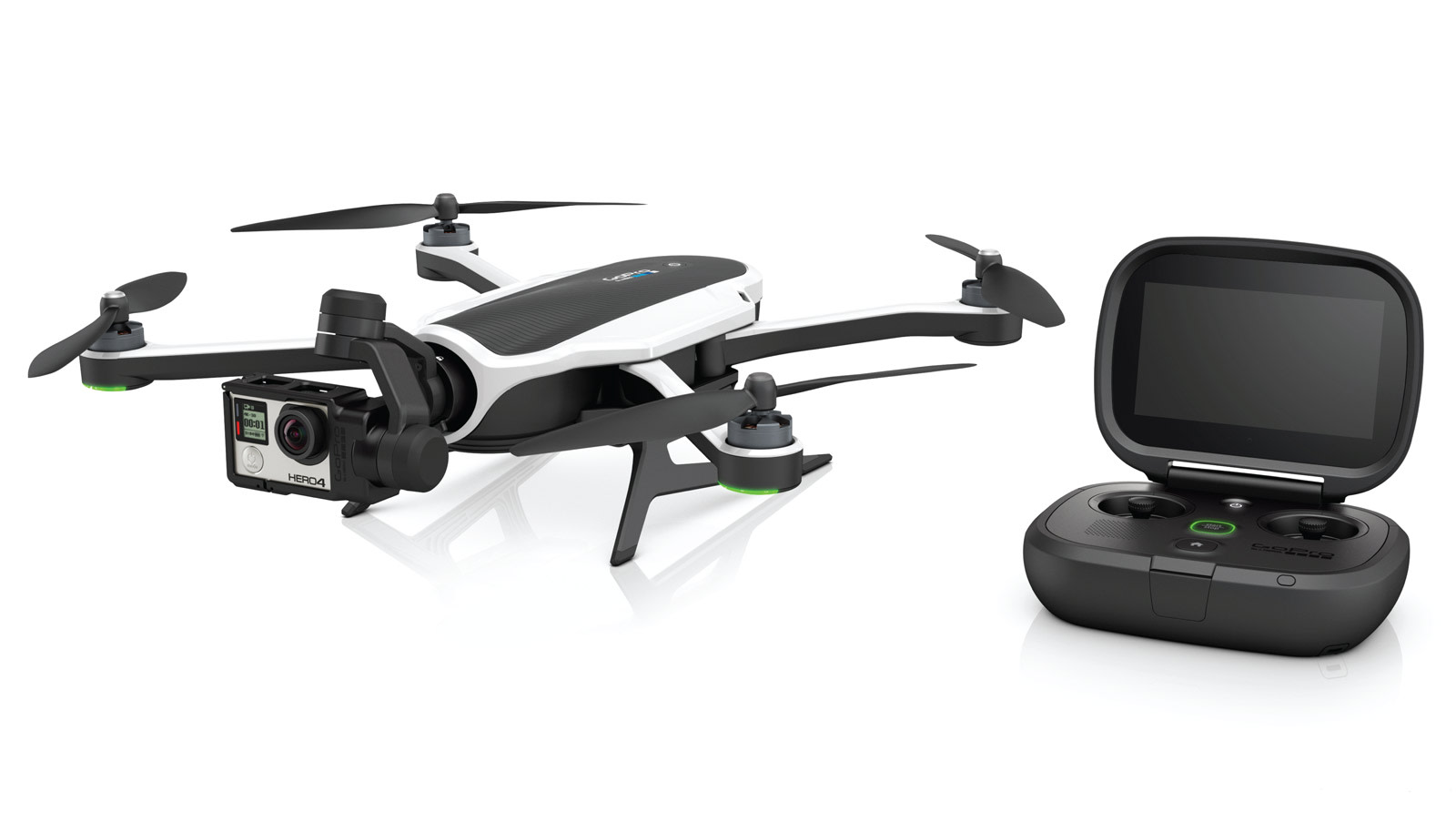
The Karma is a small, sleek looking quadcopter with a foldable design that makes it easy to transport. It comes with its own custom built controller, complete with a touchscreen built right in. The controller is said to be very beginner friendly, and the drone has a number of autonomous features that help to make it easy to fly. Still, it doesn't appear to have anything close to the level of independent control as something like the DJI Phantom 4, which is equipped with a host of sensors to allow it to safely navigate on its own without a pilot.
Being a camera company first and foremost, GoPro clearly put a lot of thought into capturing outstanding footage from its other devices. With that in mind, the Karma comes with a specially built 3-axis stabilizer designed to hold an action camera. This stabilizer can also be removed and attached to a new product called the Karma Grip, which can be mounted on a vehicle or held in your hand to get great, super-stable shots as well.
One area that the Karma may score big over its competition is in price. The drone on its own will retail for $799, which is a good price for something as small and transportable as this UAV. There will also be a $999 bundle that will include the new Hero5 Session camera, and a $1099 version that will come with the new Hero5 Black, both of which were announced today too. It isn't clear when the drone will be available for sale, but it is expected to hit the market in late October.
In terms of what these new cameras bring to the table, those looking to upgrade will have some intriguing incentives to do just that. The Hero5 Black comes equipped with 12MP sensors, voice control options, a 2" touchscreen, electronic image stabilization, 4K video at 30 fps, and possibly even GPS baked right in. Best of all, it is now waterproof without the need for an additional housing. The smaller, more affordable Hero5 Session shares most of these same features, but has a 10MP sensor for photos and video instead. Both will ship on October 2.
Both cameras now have the ability to automatically upload video to the cloud for sharing and editing as well. This new service gives you access from just about any computer, smartphone, or tablet, but will require a subscription fee to use.
I'm looking forward to seeing how he Karma performs and get some reviews. It definitely looks intriguing. As for the new cameras, they received some nice upgrades, but appear to mostly be evolutionary steps. I'm sure they'll continue to perform up to GoPro's high standards.
Selasa, 13 September 2016
Gear Closet: JBL Reflect Mini BT Wireless Sport Headphones
In case you haven't heard, there is a new iPhone coming out this week. That's pretty much common knowledge considering how much press Apple gets. But what you might not have heard is that one of the design elements of the new smartphone that is getting the most attention is Apple's decision to drop the standard audio port. This has freed up some precious space inside the phone that Apple engineers can use to add more tech, but it also means that we can no longer simply plug in a standard set of headphones. Moving forward, the iPhone's lightning port will pull double duty for both charging and audio output, which means you'll need to either use a set of lightning earbuds, a lightning-to-3.5mm adapter (included in the box), or wireless headphones to listen to your music, podcasts, and audio books. While all of those are obviously viable solutions, Apple is making a hard push towards Bluetooth headphones, particularly since they are releasing their own unique entry into that market with the new AirPods and some updated wireless options from Beats.
I haven't had a chance to test out the AirPods yet, but I have been testing some other wireless headphones that are specifically designed for use by those of us who are fairly active. I actually made the switch to Bluetooth earbuds awhile ago, and I have to say that it is a niche shift. Not having to deal with cables while running or cycling is a major plus in my book, and I think that while some will continue to be reluctant to make the change, once you do, you'll never want to go back.
Recently I've been testing the new Reflect Mini BT sport headphones from JBL and have discovered a product that ticks all of the boxes in terms of what I'm looking for when it comes to earbuds. And while they may not be quite a fancy as Apple's AirPods in terms of design and technology, they still perform very well and cost a lot less.
The Reflect Mini use Bluetooth technology to connect wirelessly to your smartphone. There once was a time when that pairing process was a bit of hassle, but those days are long over at this point. It literally took just a few seconds to pair the two devices together, and after that when ever I turned on the headphones they would automatically connect with one another. That's the way all wireless audio devices should work, and that has pretty much been my experience with all of them for some time.
As with most wireless earbuds these days, the Reflect Mini comes with an inline remote that allows you to control volume, switch tracks, pause playback, and so on. It even has a built-in mic that gives you the ability to pick up incoming phone calls too. Those are fairly standard features at this point, but JBL has made them easy to use thanks to a remote that has large buttons and a simple, straight forward configuration.
I've tested wireless earbuds in the past, and one of the biggest challenges I've typically faced is finding the right sized rubber ear tips to fit into my ears properly. Some previous models I've tried out have come with as many as seven sets of those silicon inserts, and I'd usually have to mix and match to find the ones that worked best for me. The Reflect Mini ships with four ear tips – two sets of sports and two regular. But, this time out there was now fiddling to find the right fit. The ones that came preinstalled worked perfectly for me right out of the box, snapping into place and staying there while I ran. Obviously you may find that you'll have to play around with the tips a bit to find the ones that work for you, but I've never had fit this good before.
In terms of audio performance, I found these earbuds to be solid, but not overwhelming. Music sounds crips and clear, even at higher volumes, and there was even some solid bass mixed in, something you don't always find on smaller, sport-oriented earphones. The Reflect Minis probably aren't going to win any awards for their performance, but in terms of something that you want to wear out on a run or for a workout at the gym, they are definitely up to the challenge. I will note that some of the podcasts I listened to while wearing these headphones did sound a bit muddled at times, but that is probably more due to the quality of those recordings and less about the earbuds themselves. Music tracks, which have higher production values, sounded great, which is a better way to judge overall quality.
Battery life is the other element that always concerns me, as unlike standard earbuds you'll need to recharge your wireless models on a regular basis. JBL says that the battery is good for about 8 hours playback, although that number can vary depending on volume, audio source, and so on. In real-world testing, I found that I was getting closer to 6 hours of battery life, which for me translates to having to recharge after I've run with the earbuds four or five times. While I would like to get a bit more battery life out of the Reflect Mini, I've been mostly satisfied with their performance so far.
On that note, it doesn't seem that JBL has built-in an auto-off feature for the Reflect Mini, which means if you accidentally leave them on, you'll drain the battery somewhat even when they're not in use. When you're done working out, be sure to turn them off so they'll be charged for your next session.
Since these are earbuds designed for use while being active, they have been built to be sweat proof. That means that they can survive your wet hands pawing at the remote control or you working up a good sweat while running. That doesn't mean that they are water – or even rain – proof however, so keep that in mind when using them. I've had other wireless earbuds that were sweat proof in the past, and some would stop working if I used them on a run in the rain. I don't know if that will be the case here, as I haven't tried the Reflect Mini BT in the rain yet, but it is definitely something to keep in mind.
In terms of long term durability, we'll simply have to wait to see how well these earphones perform. Right now, they function very well, with great battery life, solid audio performance, and very few distortions or audio cut-outs while in use. But, some of the wireless earbuds I've used in the past haven't stood up to the test of time, wearing out after just a couple of months of use. Hopefully that won't be the case here, but only time will tell.
In terms of price, JBL has delivered a good product that performs very well, that won't make your wallet duck for cover. At just $99.95, the Refect Mini BT stacks up very well against the competition in terms of performance and value. Apple's new AirPods, which aren't specifically designed for use while exercising, cost $159, making them a bit pricer for those who are just entering the wireless earbud market.
Whether that's you, or if you're simply looking for a new pair of wireless earbuds, the JBL Reflect Mini BT is a good choice.
Selasa, 06 September 2016
Gear Closet: Kyocera Hydro Shore Waterproof Android Phone
Now days, most of us carry our smartphones with us wherever we go, including into the backcountry when we go hiking, camping, or backpacking. That's because those devices have proven invaluable just about anywhere we might travel, including places where cell network connections are at a premium. The problem is, most smartphones are also incredibly fragile, which means taking them with us on these adventures means putting our precious gadget in jeopardy, or shelling out extra cash for a case that is waterproof and rugged. But what if you could have a smartphone that is already designed to survive in that type of environment? Better yet, what if that device was also very affordable? That's exactly what you get with the Kyocera Hydro Shore, a budget phone designed to run on AT&T's GoPhone network.
First things first, it is important to note that in terms of onboard technology, the Hydro Shore features components that won't compete with high-end, flagship phones from competitors including the iPhone or the Samsung Galaxy S7. It's 5" high-def display is bright and colorful, but not on par with those found in more expensive phones, and its 1.1 GHz Snapdragon processor is under powered at this point of its lifecycle. Additionally, the Hydro Shore's 5-megapixel main camera won't win any awards either and lags behind the competition in performance as well. On top of that, the device comes with just 8GB of onboard storage and 1GB of RAM, which is underwhelming when compared to other smartphones too. As if that wasn't enough, the device runs the Android 5.1 (Lollipop) operating system, which is two full versions out of date at this point, with no clear upgrade path moving forward. Taken as a whole, that makes this a fairly average Android device to say the least, and well behind much of the competition in what has become an increasingly crowded market.
So what exactly does the Hydro Shore have going for it? For starters, it is very affordable. The device carries a price tag of just $79.99, which puts it amongst the least expensive smartphones on the market at the moment. It also has expandable storage capacity through the use of memory cards (up to 64GB), and it features a design that makes it easy to grip and use with one hand – something that we shouldn't take for granted in an era where smartphones continue to expand in size. Plus, the phone has solid battery life – up to 13 hours of talk time – which is better than most of the competition too.
But best of all, the Hydro Shore also happens to be waterproof, which is certainly not something you find at the $80 price point all that often. In fact, the device is certified IP57 waterproof, which means that it can be fully immersed in up to 1 meter (3-feet) of water for 30 minutes without harm. That means that it should survive rainstorms, kayaking trips, and accidental dunkings, which is not something you can say about most other smartphones on the market regardless of price point.
And since the Hydro Shore was built for use around water (hence the name!), its 5" screen was made to be interacted with even when you have wet hands. That means you can snap photos, make a call, or send a text no matter the conditions. I personally appreciate this feature after a long run, which is when my sweaty hands can sometimes make it a challenge to interact with my iPhone too.
The Hydro Shore's case is made from a soft, easy-to-grip material that provides a measure of protection from accidental drops, but isn't as durable as some other ruggedized phones that I've seen, including the Samsung Galaxy S7 Active. Samsung's offering is bulkier, heavier, and costs more, but includes better waterproofing, a shatter-resistant screen, and a host of other tech features, such as wireless charging. That said, the Hydro Shore feels like it can survive quite a bit of punishment, although you may still want to add a case for a bit of extra protection.
In addition to its waterproof design and great pice, the Hydro Shore's other best feature may be that it connects to AT&T's GoPhone network, which is available through Walmart. Not only does this give consumers an option to purchase phones and services without a yearly contract, it offers affordable voice, text, and damage usage too. Plans start as low as $30 a month, although the top-end option runs $60 and includes unlimited talk and texts from the U.S. and Canada, as well as voice, text, and data usage while in those countries as well. That makes GoPhone and the Hydro Shore an intriguing and affordable option for anyone who frequents those destinations, even if they happen to own another smartphone.
As a self-confessed tech nerd, I have to say that there isn't a lot to get too excited about technology wise with this device. Its specs clearly lags behind the competition in nearly every way. But, as someone who travels a lot, and often visits remote places, the fact that they Hydro Shore is waterproof is certainly a major benefit as is the GoPhone options for use in the U.S., Canada, and Mexico. If you happen to visit those places on a regular basis, and want a solid, reliable phone for use while traveling, this is a great option. It is tough, dependable, and has great battery life. Additionally, it is also so affordable that you can actually keep your high end phone and this one too.
Find out more at the Hydro Shore official website.
Langganan:
Postingan (Atom)