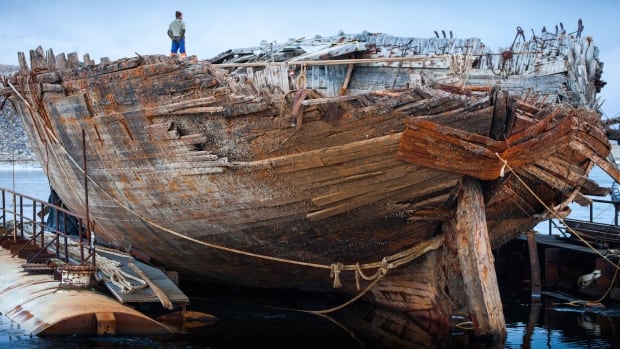
After resting at the bottom of the ocean for more then 85 years, Roald Amundsen's ship the Maud has been brought back to the surface, and is preparing to return to Norway. The ship, which was discovered off the coast of Cambridge Bay in Canada, helped to chart the Northeast Passage from 1918-1920, sunk in those waters back in 1930 after a short, but distinguished career in exploration.
A recovery team has spent the past six years working to bring the ship up from its watery grave. This past July, their efforts finally paid off, as the ship returned to the surface for the first time in more than eight decades. The crew first had to place a series of inflatable ballasts around the hull of the vessel, then slowly add air to them. Eventually this allowed them to place it on a barge and float it into harbor. Over the past two months, they have been been cleaning up the interior of the vessel in preparation for weathering the winter in the Arctic.
The recovery team says that the winter weather will actually help the ship, allowing its wooden hull to dry. This will help to reduce the ship's current weight, and will take some of the pressure off of the hull. That will help to stabilize it for the long journey back home to Norway, which is likely to take place next summer.
According to reports, the ship is in surprisingly good shape. The hull remains solid and strong, despite being at the bottom of the ocean for so long. The vessel was originally built back in 1917, and commissioned by Amundsen to accompany him on his exploration of the icy waters north of Russia. Amundsen is well know for is exploits in the cold places of our planet. He was the first person to reach the South Pole back in 1911, and was instrumental in exploring the Arctic as well, becoming the first person to full pass through the Northwest Passage.
The Maud was sold off in 1925, five years before she sank. But, she is considered an important piece of exploration history, and back home in Norway she'll be preserved for posterity. In that country, Amundsen is incredibly famous, and any relic left over from his expeditions is a valuable commodity.
This is quite a cool story. I'm glad this team was able to locate and recover the ship. Hopefully it makes it through the winter in one piece, and returns home next year as planned.
Tampilkan postingan dengan label Canada. Tampilkan semua postingan
Senin, 03 Oktober 2016
Rabu, 28 September 2016
Video: Mountain Biking Revelstoke
Primarily known as a ski destination, Revelstoke has quickly become a great place to mountain bike too. In this video, we travel to British Columbia with our friends from Teton Gravity Research to explore the possibilities of riding the many trails that can be found at the mountain resort, and beyond. If you love beautiful scenery and great mountain biking, you'll certainly appreciate this clip. And remember, it's not winter yet. There is still time to ride Revelstoke this season.
Kamis, 15 September 2016
168 Years After Sinking in the Arctic the HMS Terror has Been Found
After years of searching in the Arctic, the missing ship of explorer Sir John Franklin has been found at long last. Earlier this week it was announced that the HMS Terror, a vessel that Franklin was using to explore the icy waters of the Northwest Passage, had been found after 168 years.
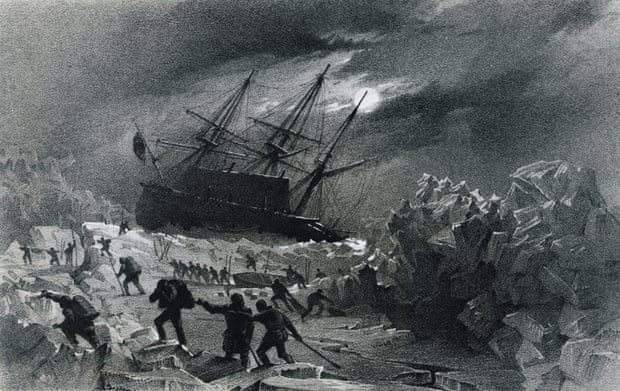
Franklin and his crew had been exploring the Arctic Ocean north of Canada back in 1848 when they ran into thick pack ice that prevented them from continuing their voyage. Both the Terror and its sister-ship, the HMS Erebus became trapped, forcing everyone onboard to abandon the two vessels. Eventually, all 129 members of the crew perished in the Arctic, and what became of the ships remained a mystery.
A few years back the Erebus was discovered by a search crew, but the location of the Terror remained a mystery. Now, thanks to a tip from a local Inuit tribesman, that mystery has been solved. The Terror was found in – of all places – Terror Bay, where its mast was spotted sticking out of the ice by passing hunters a few years back. That tip led to an archeological team going to the site to check out the area, only to discover the very vessel they had been searching for.
According to early reports, it seems that the ship is in relatively good condition, and may contain most of the things that were left onboard when it was abandoned by Franklin and his crew. In comparison, the Erebus has suffered hull damage, and Arctic currents had spread out its contents over a wide area. It'll be some time before salvage crews can truly get a look at the Terror however, so just what might be on the ship remains a mystery.
As for Franklin and his men, it seems that after they abandoned their ships, they began a long and perilous march across the Arctic with the hopes of reaching the Hudson Bay Company – a fur trading outpost far to the south. None of the men made it to the safety of that place however, vanishing in desolate white expanse of the north. Inuit oral histories talk about the foreigners passing through their area, but their ultimate fate has never been fully told.
The disaster that beset the Franklin crew is one of the worst in British naval history. It was quite a blow to that country, which ruled the seas and was pushing the boundaries of exploration at the time. Now, after more than a century and a half, at least part of the mystery has been solved.
Senin, 12 September 2016
Video: Running the Crown Traverse from Missoula to Banff
This beautiful short film takes us on an epic journey with endurance athletes Mike Foote and Mike Wolfe as the set out to run the entire length of the Crown Traverse – a 600-mile long route that runs from Missoula, Montana to Banff in Alberta, Canada. Along the way, they face just about every mountain challenge imaginable, including thick brush, icy rivers, snow covered summits, and dizzying climbs and descents. This was no simple run in the woods, but it was definitely a gorgeous expedition as you'll see below.
Rabu, 07 September 2016
Canadian Adventures: Paddling the Saguenay Fjord
As I mentioned in a previous piece about my recent trip to Quebec, Canada, the theme of the visit was "Must Love Water." As such, many of the activities that we took part in involved paddling a boat of some type. That included a stand-up paddleboard, a whitewater raft, and a canoe. But perhaps the best experience of the entire trip saw us loading up on sea kayaks and heading out onto the breathtaking Saguenay Fjord, a place of such natural beauty that it literally had to be seen to be believed.
After spending the better part of the week on waterways of one kind or another in the Saguenay-Lac-Saint-Jean region of Quebec I was beginning to think I had seen most of what there wast to experience there. After all, our whitewater run was a thrilling, adrenaline inducing affair, and even our canoe trip mixed in a taste of whitewater to keep things interesting as well. Both of those experiences took place in lovely settings with thick forests lining the shores of the rivers we were on, and scenic settings to pass through. As lovely as those settings were however, they couldn't compare with kayaking on the fjord.
On the day we were scheduled to go kayaking we spent the better part of the morning driving to the Parc National du Fjord-du-Sagueny (the Sagueny Fjord National Park) where we would eventually join our guide from OrganisAction, a local outfitter that organizes kayaking excursions there. The park itself has a lot to offer in addition to paddling. For instance, there are several self-guided hikes to take, each of which offers some great views of the surrounding landscape. But for the truly bold, there is also an impressive Via Ferrata that takes visitors high up onto the rocky cliffs on a trek that is is both beautiful and heart-stopping for entirely different reasons. Unfortunately, we weren't there to make that hike, so after a quick lunch it was off to find our guide and begin our waterborne adventure instead.
As usual with any guided kayaking excursion we had to first go through an orientation on how to paddle most efficiently, the best ways to enter and exit the boat, and how to steer the long sea kayaks that we would use on the fjord. I've had plenty of experience in this department and was more than ready to go, so thankfully it didn't take too long before we were dropping the kayaks into the water and setting out.
It didn't take long to figure out just why this region was declared a national park in Canada. A few paddles away from the dock and the impressive landscape began to take shape. High cliffs rose all around us, while tranquil water ran all the way from our put-in spot out into the middle of the fjord itself. On that day, with the sun shining high overhead and the clear blue water all around us, it was simply a magnificent place to be.
For those who don't know, a fjord is a long, narrow inlet that has typically been carved by a glacier, and has high, towering cliffs all around it. A true fjord is fed by salt water from the ocean, but in the case of the Saguenay Fjord, there is salt water underneath with a current of fresh water, fed from the Saguenay River, on top. This makes it a unique environment where both fresh and salt water fish and mammals can be found. In some parts of the fjord it is possible to spot whales or even Greenland sharks, while a variety of salmon and other fish from the river exist in the same space.
Our group paddled out into this aquatic wonderland with our jaws hanging open. Over the course of our week together we had seen some truly beautiful places, but this one the crowning jewel of the experience for sure. Paddling along the cool, but refreshing water was a relaxing affair, even when we took our boats out into the middle of the fjord itself. From there, we were afforded the best views of the waterway, able to look west towards the mouth of the river and east where the deep blue waters drifted off into the distance. I'm sure on a day where the weather isn't cooperative the fjord could be a harsh place to be, but on this day it was perfect.
One of the highlights of a kayak trip out onto the Saguenay Fjord is spotting the famous Virgin Mary Statue that adorns one of the cliff tops there. While not quite as large and imposing as the Christ the Redeemer statue in Rio, it is still a memorable sight to behold. The state was placed there by a local trader named Charles Napoleon Robitaille back in 1881. A few years prior to that, Robitaille was traveling across the frozen ice when it gave way beneath him. As he was pulled into the freezing cold water, he prayed to the Virgin Mary to save him, and somehow he found himself alive, out of the fjord, and on solid ice. After that, he vowed to do something to both commemorate the experience and thank the higher powers that he had lived. He made good on his promise and later had the statue installed.
Even from the water below the tall cliffs, the white statue of the Virgin Mary stands out against the lush green trees. The monument was another unique element to a place that was already amazing to look upon, and the story of how it got there only adds to the mystique of the place.
After spending several hours paddling the fjord it was time to head back to the shore, but not before making a detour along the opposite shore to catch a glimpse of a beautiful waterfall that tumbled down the rock face there. As we paddled we could see several such waterfalls in the distance, so it was nice to see one up close too. It was a brief stop over however, and before long we were steaming our way across the open water once again.
While we were out on the water, the tide had obviously come in. The dock that we had used as a put in earlier in the day had been sitting high and dry on the beach, allowing us to wade in a short distance before setting out. Now however, it was floating on the surface of the fjord, and the water had risen up to our waists. That made for a soggier exit, but the water felt good after a warm afternoon.
After dragging our boats back up on shore, it was time to say goodbye to our guide and the fjord. It was certainly a memorable day in the kayaks however, and one that I would love to do again. In fact, our guide mentioned that there are some primitive campsites along the shore of the fjord that stretch for miles. He said that adventurous kayakers like to paddle down the fjord and stay at those campsites as they go. With a good kayak, plenty of supplies and gear, it would be possible to go for days in this remote, and pristine wilderness. That sounds like the kind of trip I would enjoy doing.
If you're in the Saguenay-Lac-Saint-Jean region in the summer, a visit to the national park is a must-do adventure. Even if you can't get out on the water in a kayak – which I HIGHLY recommend you do – at least go for a hike and take in the surrounding landscape. It is a place that will definitely leave a lasting impression.
After spending the better part of the week on waterways of one kind or another in the Saguenay-Lac-Saint-Jean region of Quebec I was beginning to think I had seen most of what there wast to experience there. After all, our whitewater run was a thrilling, adrenaline inducing affair, and even our canoe trip mixed in a taste of whitewater to keep things interesting as well. Both of those experiences took place in lovely settings with thick forests lining the shores of the rivers we were on, and scenic settings to pass through. As lovely as those settings were however, they couldn't compare with kayaking on the fjord.
On the day we were scheduled to go kayaking we spent the better part of the morning driving to the Parc National du Fjord-du-Sagueny (the Sagueny Fjord National Park) where we would eventually join our guide from OrganisAction, a local outfitter that organizes kayaking excursions there. The park itself has a lot to offer in addition to paddling. For instance, there are several self-guided hikes to take, each of which offers some great views of the surrounding landscape. But for the truly bold, there is also an impressive Via Ferrata that takes visitors high up onto the rocky cliffs on a trek that is is both beautiful and heart-stopping for entirely different reasons. Unfortunately, we weren't there to make that hike, so after a quick lunch it was off to find our guide and begin our waterborne adventure instead.
As usual with any guided kayaking excursion we had to first go through an orientation on how to paddle most efficiently, the best ways to enter and exit the boat, and how to steer the long sea kayaks that we would use on the fjord. I've had plenty of experience in this department and was more than ready to go, so thankfully it didn't take too long before we were dropping the kayaks into the water and setting out.
It didn't take long to figure out just why this region was declared a national park in Canada. A few paddles away from the dock and the impressive landscape began to take shape. High cliffs rose all around us, while tranquil water ran all the way from our put-in spot out into the middle of the fjord itself. On that day, with the sun shining high overhead and the clear blue water all around us, it was simply a magnificent place to be.
For those who don't know, a fjord is a long, narrow inlet that has typically been carved by a glacier, and has high, towering cliffs all around it. A true fjord is fed by salt water from the ocean, but in the case of the Saguenay Fjord, there is salt water underneath with a current of fresh water, fed from the Saguenay River, on top. This makes it a unique environment where both fresh and salt water fish and mammals can be found. In some parts of the fjord it is possible to spot whales or even Greenland sharks, while a variety of salmon and other fish from the river exist in the same space.
Our group paddled out into this aquatic wonderland with our jaws hanging open. Over the course of our week together we had seen some truly beautiful places, but this one the crowning jewel of the experience for sure. Paddling along the cool, but refreshing water was a relaxing affair, even when we took our boats out into the middle of the fjord itself. From there, we were afforded the best views of the waterway, able to look west towards the mouth of the river and east where the deep blue waters drifted off into the distance. I'm sure on a day where the weather isn't cooperative the fjord could be a harsh place to be, but on this day it was perfect.
One of the highlights of a kayak trip out onto the Saguenay Fjord is spotting the famous Virgin Mary Statue that adorns one of the cliff tops there. While not quite as large and imposing as the Christ the Redeemer statue in Rio, it is still a memorable sight to behold. The state was placed there by a local trader named Charles Napoleon Robitaille back in 1881. A few years prior to that, Robitaille was traveling across the frozen ice when it gave way beneath him. As he was pulled into the freezing cold water, he prayed to the Virgin Mary to save him, and somehow he found himself alive, out of the fjord, and on solid ice. After that, he vowed to do something to both commemorate the experience and thank the higher powers that he had lived. He made good on his promise and later had the statue installed.
Even from the water below the tall cliffs, the white statue of the Virgin Mary stands out against the lush green trees. The monument was another unique element to a place that was already amazing to look upon, and the story of how it got there only adds to the mystique of the place.
After spending several hours paddling the fjord it was time to head back to the shore, but not before making a detour along the opposite shore to catch a glimpse of a beautiful waterfall that tumbled down the rock face there. As we paddled we could see several such waterfalls in the distance, so it was nice to see one up close too. It was a brief stop over however, and before long we were steaming our way across the open water once again.
While we were out on the water, the tide had obviously come in. The dock that we had used as a put in earlier in the day had been sitting high and dry on the beach, allowing us to wade in a short distance before setting out. Now however, it was floating on the surface of the fjord, and the water had risen up to our waists. That made for a soggier exit, but the water felt good after a warm afternoon.
After dragging our boats back up on shore, it was time to say goodbye to our guide and the fjord. It was certainly a memorable day in the kayaks however, and one that I would love to do again. In fact, our guide mentioned that there are some primitive campsites along the shore of the fjord that stretch for miles. He said that adventurous kayakers like to paddle down the fjord and stay at those campsites as they go. With a good kayak, plenty of supplies and gear, it would be possible to go for days in this remote, and pristine wilderness. That sounds like the kind of trip I would enjoy doing.
If you're in the Saguenay-Lac-Saint-Jean region in the summer, a visit to the national park is a must-do adventure. Even if you can't get out on the water in a kayak – which I HIGHLY recommend you do – at least go for a hike and take in the surrounding landscape. It is a place that will definitely leave a lasting impression.
Selasa, 06 September 2016
Gear Closet: Kyocera Hydro Shore Waterproof Android Phone
Now days, most of us carry our smartphones with us wherever we go, including into the backcountry when we go hiking, camping, or backpacking. That's because those devices have proven invaluable just about anywhere we might travel, including places where cell network connections are at a premium. The problem is, most smartphones are also incredibly fragile, which means taking them with us on these adventures means putting our precious gadget in jeopardy, or shelling out extra cash for a case that is waterproof and rugged. But what if you could have a smartphone that is already designed to survive in that type of environment? Better yet, what if that device was also very affordable? That's exactly what you get with the Kyocera Hydro Shore, a budget phone designed to run on AT&T's GoPhone network.
First things first, it is important to note that in terms of onboard technology, the Hydro Shore features components that won't compete with high-end, flagship phones from competitors including the iPhone or the Samsung Galaxy S7. It's 5" high-def display is bright and colorful, but not on par with those found in more expensive phones, and its 1.1 GHz Snapdragon processor is under powered at this point of its lifecycle. Additionally, the Hydro Shore's 5-megapixel main camera won't win any awards either and lags behind the competition in performance as well. On top of that, the device comes with just 8GB of onboard storage and 1GB of RAM, which is underwhelming when compared to other smartphones too. As if that wasn't enough, the device runs the Android 5.1 (Lollipop) operating system, which is two full versions out of date at this point, with no clear upgrade path moving forward. Taken as a whole, that makes this a fairly average Android device to say the least, and well behind much of the competition in what has become an increasingly crowded market.
So what exactly does the Hydro Shore have going for it? For starters, it is very affordable. The device carries a price tag of just $79.99, which puts it amongst the least expensive smartphones on the market at the moment. It also has expandable storage capacity through the use of memory cards (up to 64GB), and it features a design that makes it easy to grip and use with one hand – something that we shouldn't take for granted in an era where smartphones continue to expand in size. Plus, the phone has solid battery life – up to 13 hours of talk time – which is better than most of the competition too.
But best of all, the Hydro Shore also happens to be waterproof, which is certainly not something you find at the $80 price point all that often. In fact, the device is certified IP57 waterproof, which means that it can be fully immersed in up to 1 meter (3-feet) of water for 30 minutes without harm. That means that it should survive rainstorms, kayaking trips, and accidental dunkings, which is not something you can say about most other smartphones on the market regardless of price point.
And since the Hydro Shore was built for use around water (hence the name!), its 5" screen was made to be interacted with even when you have wet hands. That means you can snap photos, make a call, or send a text no matter the conditions. I personally appreciate this feature after a long run, which is when my sweaty hands can sometimes make it a challenge to interact with my iPhone too.
The Hydro Shore's case is made from a soft, easy-to-grip material that provides a measure of protection from accidental drops, but isn't as durable as some other ruggedized phones that I've seen, including the Samsung Galaxy S7 Active. Samsung's offering is bulkier, heavier, and costs more, but includes better waterproofing, a shatter-resistant screen, and a host of other tech features, such as wireless charging. That said, the Hydro Shore feels like it can survive quite a bit of punishment, although you may still want to add a case for a bit of extra protection.
In addition to its waterproof design and great pice, the Hydro Shore's other best feature may be that it connects to AT&T's GoPhone network, which is available through Walmart. Not only does this give consumers an option to purchase phones and services without a yearly contract, it offers affordable voice, text, and damage usage too. Plans start as low as $30 a month, although the top-end option runs $60 and includes unlimited talk and texts from the U.S. and Canada, as well as voice, text, and data usage while in those countries as well. That makes GoPhone and the Hydro Shore an intriguing and affordable option for anyone who frequents those destinations, even if they happen to own another smartphone.
As a self-confessed tech nerd, I have to say that there isn't a lot to get too excited about technology wise with this device. Its specs clearly lags behind the competition in nearly every way. But, as someone who travels a lot, and often visits remote places, the fact that they Hydro Shore is waterproof is certainly a major benefit as is the GoPhone options for use in the U.S., Canada, and Mexico. If you happen to visit those places on a regular basis, and want a solid, reliable phone for use while traveling, this is a great option. It is tough, dependable, and has great battery life. Additionally, it is also so affordable that you can actually keep your high end phone and this one too.
Find out more at the Hydro Shore official website.
Langganan:
Postingan (Atom)