Selasa, 08 November 2016

Selasa, 01 November 2016
Lokasi dan Rute Menuju Bukit Teletubbies Blitar
Rute Menuju Bukit Teletubbies Blitar - Memang bukan rahasia lagi jika Blitar memiliki banyak sekali tempat wisata menarik yang wajib anda kunjungi. Kota yang terkenal dengan sebutan Kota Proklamator ini kaya akan pantai yang eksotis. Namun tak hanya pantainya saja yang terkenal, masih ada wisata alam lainnya yang patut untuk anda kunjungi salah satunya adalah Bukit Teletubbies.
Dinamakan Bukit
Dinamakan Bukit
Video: New Zealand - Land of Light and Shadow
Anyone who has ever been to New Zealand will tell you just how beautiful of a place it is, but this video is a good reminder nonetheless. It captures some of the stunning landscapes of that country in timelapse, with the sun, clouds, and sky all casting intricate shadows across the ground. Short and sweet, this is a minute-and-a-half of pure bliss, and a perfect way to wrap up the day.
To visit New Zealand yourself, check out all of the options available from Mountain Travel Sobek.
New Zealand - Land of light and shadow from Stephen Patience Photography on Vimeo.
To visit New Zealand yourself, check out all of the options available from Mountain Travel Sobek.
Video: Take a Stunning Tour of the International Space Station
Most of us will never see the inside of the International Space Station. It just isn't in the cards. Thankfully, we have amazing videos like this one, which take us on a grand tour of that orbital apartment for astronauts. In this clip, you'll slowly drift through one of the most impressive feats of engineering ever created, and you'll get a first hand look at the various modules the make up the ISS. Set to some very tranquil music, this tour is relaxing to watch, so sit back, get comfortable, set the video to "full scree" and enjoy.
Gear Closet: The Cubed Travel Jacket from Clothing Arts

These same sentiments have been sweeping through the travel industry over the past few years as well, and as a result we're seeing good looking gear made for frequent travelers that also incorporate the latest technical fabrics. This allows those products to also perform at a high level, while delivering all of the functionality that is unique to travelers too. That is exactly what you get from the Cubed Travel Jacket from Clothing Arts, a stylish jacket designed specifically with the needs of travelers in mind, with more than a few features that you didn't even realize you needed until now.
For those not familiar with Clothing Arts, the company makes a line of apparel to keep travelers safe and comfortable no matter where they go. For instance, the Pick Pocket Proof Pants are a must have for any adventure traveler, while the Travel Shirt features classic good looks that makes it feel right at home in any environment. But the Cubed Travel Jacket is the company's first attempt at making outerwear, and the designers behind it have clearly put a lot of thought into what they wanted to deliver. The result is a jacket that not only looks good, but offers Clothing Arts' trademark security features too.
Made from eVent's DVStorm fabrics, the Cubed Jacket is both water and wind proof, without sacrificing breathability. Those fabrics, when paired with taped seams, help to keep all but the worst weather conditions at bay. In fact, I took this jacket with me to Spain a few weeks back, where we faced regular rain showers and the occasional gusty day. But, this jacket performed admirably in all weather conditions, keeping me comfortable and dry at all times.
Despite being made from these highly technical fabrics, the Cubed Jacket doesn't look technical. That is to say that there is nothing about this jacket that screams "outdoorsy." Instead, it is made with a more fashionable look that allows it to blend in seamlessly in urban environments, while still looking good on the trail too. No one will ever mistake this jacket for something from The North Face or Mountain Hardwear, but that is a very good thing for travelers who don't want to look like they just stepped off the mountain. Instead, they'll find a more understated – and again classic – design that won't go out of style by the time the next fashion season rolls around.
In terms of other features, the Cubed Jacket also includes velcro wrist closures and waterproof zippers to further assist in battling the elements and dialing in just the right fit. It also comes with a detachable hood, which is nice to have in rainy conditions but can be removed when visiting a destination where that isn't especially a problem. Personally, I prefer a jacket with a hood, but I also like that you have the option here.
Of course, most of these features that I have noted already aren't enough to help the Cubed Travel Jacket to stand out in an increasingly crowded market. But, what this jacket does better than any other I've worn, is offer you plenty of pockets to carry your items around, most of which are secure enough to ensure that those items remain safe from unsavory characters.
As mentioned, Clothing Arts has made a name for itself by creating travel apparel that offers security options that make those items pick-pocket proof. Those same sensibilities carried over here with a variety of onboard storage options. In addition to two standard hand pockets, you'll also find two Napoleon pockets, and for more stashed away on the interior of the jacket. Those options include compartments that are perfect for stowing away your passport, sunglasses, smartphone, and even a small tablet.
There are a number of small details that help to set this jacket apart from the competition as well, including the ability to access the contents of some of the interior pockets from both inside and outside of the jacket. This is a level of versatility that I haven't found in other travel jackets, and it is something you come to appreciate when wanting to access your smartphone in a rainstorm for instance.
Several of the larger interior pockets also come with patent-pending security clips that add yet another layer of protection from thieves. In addition to having to gain access to the interior of the jacket, and open the zippered pockets, any would-be pickpockets would also have to get around the security clips without being noticed. Not an easy task to say the least, which should provide a nice piece of mind when traveling abroad.
Each of these small elements blend together incredibly well in the Cubed Travel Jacket, making it a must have for anyone who travels regularly. It is a deft combination of convenience, comfort, and versatility, wrapped up in a good looking package. It isn't easy to make jacket that delivers on all of those fronts, and creating one that is both water and wind proof is a nice feature as well.
All of that functionality and design comes at a price however. The Cubed Travel Jacket carries a price tag of $380, which puts it right in line with some of the best high-end technical jackets from the outdoor brands that we love so much. If you think of this product as "just a travel jacket" you'll probably see that price point as being way to high. Indeed, you can definitely find good dedicated travel jackets for less. But, if you take a look at the specs on Clothing Arts' offering, and weigh in its level of performance, this is a jacket that is more akin to something you'd find in more technical outdoor pursuits. The Cubed Travel Jacket hasn't been designed for those activities of course, but it performs on much the same level.
If you need a travel jacket that stand up to the rigors of the road with ease, while also providing a high level of versatility and security, than this is the product for you. Not only does it look good and provide protection from bad weather, it also allows you to carry a full day's worth of gear with ease and security. And when you buy this jacket you can bet that you're investing in a product that will last for years and accompany you on many adventures. It is durable enough to take virtually anywhere, and you'll look great no matter where you. What more could you ask for out of any piece of travel clothing?
Find out more at ClothingArts.com.
Outside Gives Us the 5 Best Deals in Outdoor Gear

Amongst the tips that Outside has to offer are that these stores offer plenty of great gear for car campers in particular where when and size is not a major issue. They also say that both shops are great for purchasing rods and reels, but you're better served buying your flies elsewhere. Finally, they also recommend that you take your time when visiting Bass Pro Shops or Cabela's as these outlets are quite large and it takes awhile to sift through everything, particularly if you're looking for good deals.
Speaking of which, Outside also offers their picks for the best bargains to be found inside these stores as well. Those bargains include a 6-person tent from Bass Pro that costs just $100, a 3-pack of 200-lumen flashlights for $25, and a 20ºF sleeping bag from Coleman that is priced at $50. The magazine also recommends a $20 jug for bringing plenty of water to the campsite and a $13 compass from Brunton for navigating the way.
While not all of those items will necessarily come in handy for your next trip, they are a good reminder that Bass Pro Shop and Cabela's have some affordable gear that is useful in the outdoors no matter what activities you're taking part in. I'm not a hunter or much of a fisherman (I'm learning to fly fish and enjoy it though!) but I do like good gear that doesn't break the bank. I think we'll find that at one of these outlets, even if REI and similar stores cater more to our needs.
Dawn Wall Update: Progress Slows, But Adam Ondra Continues to Climb

As of this past weekend, Ondra has successfully completed the first 13 pitches of the Dawn Wall, and was working on pitch 14, 15, and 16. Those are amongst the three toughest sections of the entire climb, and he reports that it will take colder weather and more skin on his fingertips to finish those three pitches. He says both are on the way, but in the meantime he's been gathering intel on the moves he'll have to make – some of them very tough – to get through this next series of challenges.
Once he's above pitch 16 things get a bit easier and he should have few problems finishing off the Dawn Wall. If he does complete the climb, it'll be only the second time it has been scaled. You probably recall that Tommy Caldwell and Kevin Jorgeson knocked it off in January of 2015, but they spent years planning their ascent. Ondra is currently making his first visit to Yosemite Valley.
The Czech climber hasn't been only focused on the Dawn Wall. Last week he took some time off to climb The Nose with his father, hoping to complete that iconic route in a single day. While they did manage to finish around midnight, it wasn't completely free climbed. They also got hit by a storm near the summit and were forced to camp out on top until the following morning.
After his foray on The Nose, Ondra has now returned to the Dawn Wall and is working on figuring out that challenge. We'll continue to bring you news of his progress as we hear more.
Senin, 31 Oktober 2016
Video: Scenes from the Arctic
The Arctic is one of those places on our planet that few of us ever get the opportunity to see in person. But, thanks to this video, we can all travel to this frozen region of the Earth and experience for ourselves. The scenes shown here are beautiful, tranquil, and amazing to see. It is quite an experience and one that I think you'll enjoy greatly. Sit back and soak this one in, as it is indeed a wonderful short film set in remote place.
Video: Renan Ozturk - Obsessed or Devoted?
This video comes our way courtesy of The North Face and is part of the company's new #QuestionMadness marketing campaign which celebrates TNF's 50th anniversary. The clip focuses on sponsored athlete Renan Ozturk, who is amongst the best mountaineers/climbers in the world today. As with the other videos in this series, the question is where or not Renan is obsessed or devoted to his passion projects, which is a valid one for anyone who has seen the film Meru. But Renan isn't just trying to push the envelope in the mountains, but has other aspects to his character as well as you'll see here. Like most other outdoor athletes of his caliber, he is driven to be the best in whatever undertaking he sets his mind upon.
Himalaya Fall 2016: Controversy on Manaslu - 150 Summit without Actually Reaching the Top

Those in the know in the mountaineering world understand that there is a narrow ridge that is covered in a snow cornice that runs out to the actual summit of the mountain. That ridge is unstable and difficult to cross, particularly in high winds or other poor weather conditions. As a result, about 90% of the climbers this season turned back approximately 5 to 10 meters below the actual top of the mountain, but still claimed a full summit anyway. This has sparked some debate as to whether or not those claims are actually true.
In writing about a slew of climbing expeditions this fall, Alan Arnette also weighed in on the topic, sharing some of his own experiences. He also reminds us that a Japanese climber perished on Manaslu this year when he fell through the cornice while trying to reach the true summit. That's an indication of just how dangerous the final approach to the top truly is. Although as Alan points out via a quote from Himex boss Russel Brice, the blame is square placed on the team that was put in charge of fixing the ropes to the summit, but failed to complete the final 20 meters, which directly led to this fatality a few weeks back.
When considering where to actually give credit to someone for making the summit on Manaslu, it is important to also note that the incredibly narrow approach to the top serves as a significant bottle-neck for those going up and coming down. It would literally take hours for everyone to shuffle across the approach ridge, even if it were completely safe. That would leave climbers standing in line at the top of the mountain while they waited their turn, leaving them exposed to the elements the entire time. Most of the operators on Manaslu aren't willing to put their clients through that kind of difficulty, so they certify summits at the lower point on the mountain.
On the other hand, getting credit for a summit has always been about reaching the highest point. To take that away from experience doesn't seem completely fair either. Yes, it would mean fewer people climbing Manaslu if they actually had to negotiate that tough final portion of the ascent, but that isn't necessarily a bad thing either. There is a part of me that feels that if you want to actually receive a summit certificate you should have to reach the actual true summit to get credit. Anything else, just comes up short. It is up to the climbers themselves if they actually want to complete those final 20 meters or play it safe and turn back below that point. But if they don't get all the way up, the wouldn't earn full credit either.
Obviously this is a tough call. For safety sake, I understand why they turn back. But for the pure mountaineering aspects of it, they should actually touch the highest point in my opinion.
What do you think? Share your thoughts in the comments section below.
Patagonia to Close All Stores in the U.S. for Election Day

The move comes as part of Patagonia's Vote Our Planet initiative, which encourages us to support candidates that take a tough stand on environmental issues, something that should be of major concern for all outdoor enthusiasts. The idea is to rally around men and women who are running for office that are looking to preserve the planet for future generations and protect wildlife and wild spaces.
“During a time of catastrophic environmental crisis, when America needs strong leadership to confront the fundamental threat of climate change, voter turnout threatens to reach historic lows as people are turned off by the ugliness of politics,†said Patagonia CEO Rose Marcario. “As a business, we have a unique ability to take a stand and choose to prioritize the health of the planet over profit, and I think it’s important we take that opportunity when it truly matters. We want to do everything possible to empower citizens to make their voices heard and elect candidates up and down the ballot who will protect our planet.â€
Obviously the presidential election to be held next week is an important one for many reasons. I don't often use this blog as a place to make a political statement or support any one candidate over another. But I will say that the future of the country, and perhaps the world, rests in the hands of who will be elected to the White House on November 8. While I have my own opinions on who should or should not be in charge, what is most important to me is that everyone get out to vote. Patagonia is making that a little easier, at least for its own employees and customers.
If you care about the environment, do a little research on the candidates in your area and get out and vote for the ones that are looking at ways to make things better moving forward. We are at a critical point when it comes to climate change and other environmental factors, and now is the time to have our voices heard. Vote on November 8 to at least play a role in that process.
Antarctica 2016: Interactive Map Explains Ski Routes to the South Pole

The map is hosted at ExplorersHouse.com and includes 9 different paths that explorers use when traveling to the the South Pole as well as 1 path to reach the Pole of Inaccessibility. Clicking on any of the routes will provide information about its length, who first pioneered it, and the year in which it was traveled. For instance, both Amundsen and Scott Routes are marked on the map, which were first opened back in 1911-1912, when the two legendary explorers were battling one another to be the first to reach the South Pole.
Explorer House included some text with the map that provides context on what exactly a "valid" expedition truly means. In this case, that is defined as starting anywhere along the Antarctic coast and skiing all the way to the South Pole. This rules out a "last degree" journey of course, which is exactly what it sounds like – a short ski expedition from 89ºS to 90ºS. Those "tourist trips" are typically only about 100 km (62 miles) in length, while a full expedition covers more than 1000 km (620 miles).
As we head into the start of a new Antarctic season, you'll find that the vast majority of the skiers are using the Hercules Inlet Route, which has become the standard for these types of expeditions. They'll fly out of Punta Arenas and land at the ice camp that is built and maintained by ALE at Union Glacier. From there, they'll catch another short flight to ferry them out to their starting point. If they are going solo and unsupported, they'll all be dropped off at unique locations to begin the journey, as the rules for adventure state that they can't have any contact with another individual along the way in order to maintain that status.
Later this week – weather permitting – the first teams will begin their march to the Pole. Once they're underway, we'll provide regular updates on their progress. There are a number of goods stories to follow, so it should be an interesting year in the Antarctic.
Kamis, 27 Oktober 2016
Video: Unclimbed - Reaching the Summit in the Himalaya (Part 7)
If you've been watching the fantastic series of "Unclimbed" videos from Discovery Canada, you'll definitely want to catch this latest episode. In this latest installment of the mountaineering series the team of Gabriel Filippi, Elia Saikaly, and Pasang Kaji Sherpa are reunited in Kathmandu before setting out to the Himalaya to the first ascent of several unclimbed peaks. But before they go, they must face down a mountaineering legend who has never summited a single peak – the indomitable Miss Elizabeth Hawley.
Video: What Exactly is Adventure Racing?
I write about adventure racing regularly on this blog, but not everyone knows exactly what the sport consists of. Thankfully, the fine folks over at the Adventure Racing World Series have put together this excellent and helpful video to help explain the sport to newcomers and to remind long time fans just how awesome it is. For my money, adventure racers are amongst the best endurance athletes in the world. Don't believe me? Check out the clip below to find out why I feel that way.
Video: Stunning Wingsuit Flight Ends in Nasty Crash
Wingsuit pilots take their lives into their own hands every time they take flight. Case in point, in this video a flyer named Eric Dossantos starts off with a leap from the top of a mountain with stunningly beautiful views all around him. His descent down the slopes of the peak looks fantastic too, with snow covered ridges zipping by at warp speed below him. But once he soars low enough to encounter the treeline things start to go wrong with Eric ultimately crashing into the forest below. Fortunately, he survived the flight, although he did end up with fractured ribs, multiple bruises and lacerations, head trauma, and a lacerated kidney. Dossantos has set up a GoFundMe page to help pay for his medical bills but it is going to be awhile before he's fully back on his feet.
The flight took place above Chamonix, France, which has recently banned wingsuit flying because of these types of dangers. This video underscores why they decided to make that decision, but thankfully Eric survived. Others haven't been quite so lucky.
How not to fly a wing suit unless you want to crash from Eric Dossantos on Vimeo.
The flight took place above Chamonix, France, which has recently banned wingsuit flying because of these types of dangers. This video underscores why they decided to make that decision, but thankfully Eric survived. Others haven't been quite so lucky.
Donations to the Himalayan Stove Project Doubled Through Giving Tuesday

One of my favorite nonprofits is the Himalayan Stove Project, an organization that is replacing old, inefficient, and dangerous cookstoves in Nepal with clean burning, healthier models. Over the past few years, the HSP has distributed and installed more than 3000 stoves, impacting the lives of thousands of people as a result. Many of the families that have received these stoves have seen their lives transformed. The air in their homes is cleaner than ever, and they can now enjoy a meal indoors together, often for the very first time. In short, the Himalayan Stove Project is having a direct, and measurable, impact on the quality of life for the people that it helps, which is something I appreciate and admire greatly.
Heading into the holidays we can all do something to help the HSP and see our contributions to the program stretch even further. Between now and Giving Tuesday – November 29, 2016 – all donations to the project will automatically be doubled thanks to a generous anonymous supporter. That means that if you give $50, the HSP will receive $100. No donation, no matter how big or small, is exempt, which makes this the perfect time to contribute to the cause.
I personally love what the Himalayan Stove Project does for a number of personal reasons. The fact that the not-for-profit is having such a dramatic effect on the lives of the people it helps is inspiring to say the least. There are a lot of other foundations like this one that aspire to help people in the developing parts of the world, but they often struggle to actually deliver on their promise. That isn't so with the HSP, which has done a wonderful job of staying focused on its mission.
The other reason I'm a fan of the Himalayan Stove Project is that it is helping people who live in Nepal, a country that I dearly love. It is easily one of the most beautiful places I've ever been, and the people there are incredibly warm and generous, despite the fact that they often have little of their own. It is a place that has left its mark on everyone that has visited it, and it is understandable why those of us who have been there would like to have a positive impact on their lives.
If you're looking for a great charity to contribute to this year, the Himalayan Stove Project is a fantastic option. Take a look at the HSP website to learn more, and click here to donate to the cause. Remember, anything you give between now and November 29 will be doubled.
Himalaya Fall 2016: Summit Push Begins on Ama Dablam

Yesterday, the rope-fixing Sherpas on Ama Dablam reached the summit after waiting out poor weather conditions all of last week. The team of six mountain guides worked from Camp 2 on the mountain all the way to the 6812-meter (22,349 ft) summit in a single push, clearing the way for commercial teams that have been waiting in the wings. Now, with the ropes installed, it looks like there will be a mass summit push will begin in the next few days.
According to The Himalayan Times, more than 400 climbers will now move up from Base Camp to get into position to reach the summit. 200 of those alpinists are foreign climbers, while the others mostly consist of guides, high altitude porters, and the like.
It is unclear at this time exactly when the summit push will be completed, but with good weather in the forecast it seems like it should take place within the next few days. Unlike expeditions on other big Himalayan peaks, it doesn't take weeks to acclimatize on Ama Dablam, nor does it take numerous days to top out. Once the push begins, the summit should be very busy a few days later.
Ama Dablam is one of the most distinct mountains in the Khumbu Valley, with climbers and trekkers passing by on their way to Everest Base Camp. The beautiful peak is a good place for climbers to get valuable experience for what it is like to climb in the Himalaya prior to moving on to one of the 8000-meter peaks. For my money, it is still one of the most beautiful mountains that I have ever personally seen with my own eyes, creating a very memorable view on the trail to EBC.
Good luck to everyone heading up the mountain in the next few days. Get up and down safely and quickly, and enjoy the walk.
Rabu, 26 Oktober 2016
Video: Exploring Japan's Spiritual Connection with the Mountains
The Japanese practice of Shugendo is a spiritual practice of seeking a connection with nature, particularly in the mountains where Japan's forefathers believed their gods resided. This connection can bring on a zen-like state, with the person seeking a oneness with the natural world around them. In this video, Salomon athletes Rickey Gates and Anna Frost make the journey to Japan in search of their own unique connection with the natural world. As you'll see in the video below, what they find there is a powerful attachment to nature that is unlike anything found in other cultures. Be sure to turn on subtitles to get the entire story.
Video: Base Jumper Sets New World Record by Leaping Off Cho Oyu
Standing 8188 meters (26,684 ft) in height, Cho Oyu is the 6th highest peak in the world, and a popular climbing destination during the fall season in the Himalaya. A few weeks back, climber/BASE jumper Valery Rozov went up the mountain in an attempt to fly off the summit. He didn't quite make it to the top, but he did manage to don his wingsuit and leap from 7700 meters (25,262 ft), setting a new world record in the process. You can learn about his expedition, and see his flight in the video below.
Gear Closet: Haibike Xduro AllMtn RX Electric Mountain Bike
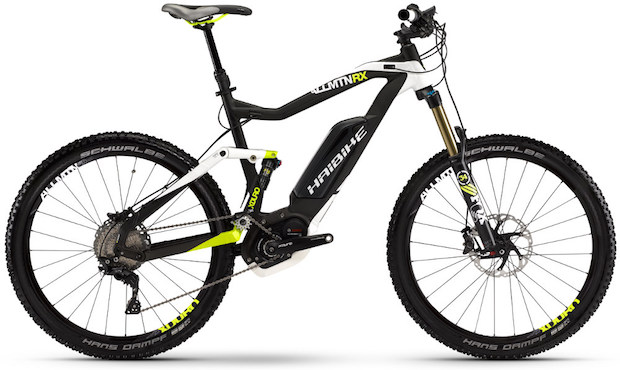
This little speed-boost has made e-bikes especially popular with commuters, many of whom find that the onboard motor helps them travel along with traffic better and allows them to arrive at their destination relatively fresh thanks to not having to exert as much energy.
An avid biker myself, I've been intrigued with e-bikes for some time, but hadn't gotten the chance to try one out for myself. That changed recently when Haibike sent me one of their electric assisted mountain bikes to take for a spin, and I have to say I came away impressed. The bike delivered on everything that was promised – and more – allowing me to power through a ride like never before. But in the end, it also left me reevaluating why I like mountain biking so much in the first place.
For my little e-bike test drive, Haibike sent me a 2015 model known as the Xduro AllMtn RX. The current model that fits pretty much the same specs is the Xduro AllMtn 7.0. Both versions sport Shimano components, 27.5" tires, a full-supsenion, and a slick looking design that looks aggressive and fun to ride. Hidden inside the aluminum frame however, is a 36-volt motor that is powered by a 500 Wh battery that help this bike truly stand out from the crowd.
Before we go too far into this review, it is important to point out that while most e-bikes provide an electric assist, but you still have to do all of the pedaling. You simply don't have to pedal quite so hard in order to get the bike up to speed nor to maintain that speed. Likewise, when climbing a hill, the speed-assist kicks in to lend a hand, making it surprisingly easy to shoot up steep grades, although you still have to put in some work to get to the top.
The motor installed on this bike has five different settings, including Eco, Tour, Sport, and Turbo, as well as off. Yes, you can ride the bike without any type of electrical assist, but since it tips the scales at 49.2 pounds, it does feel a bit slow and ponderous. Eco mode provides the least level of assistance, which doesn't feel like much, although it is there to lend a hand when you need it. Turbo is bit like strapping a rocket to your bike, although it comes at dramatically reduced battery life.
While testing the Xduro, I only switched over to the highest level when tackling a big hill, otherwise I tended to stay in Tour mode most of the time. This allowed me to easily maintain a good rate of speed over a variety of terrains without having to expend a lot of energy in the process. The result was that at the end of my ride, I still felt like I had a good workout, but I wasn't completely wasted, even after riding a tough trail.
The Xduro AllMtn has a built in cycling computer mounted on its handlebars that provides information such as your current speed and time, as well as offering a trip odometer, and life-time odometer all in a digital format. That same display also provides constant updates of how much battery life remains by showing not only a battery indicator but also the amount of range the bike has before it runs out of juice. The screen also has an icon that indicates which level of power that the motor is set too as well.
Getting on the bike for the first time, I was unsure exactly how things worked. The motor was engaged, but there is no throttle that you can control, so I wasn't exactly sure how I'd know if it was working properly. It only took a second to figure that out however, as when I started to pedal you could feel the electric assist kick in with a very noticeable boost, even in Eco mode. That boost only became more noticeable as increased the level of power generated by the motor.
Before too long, I found myself testing the bike to see what it could do in a variety of different conditions, and for the most part it performed very well. It wasn't quite as agile and responsive as my Trek mountain bike back home, then again that bike doesn't power up big hills as easily either. I have to admit, the Xduro AllMtn is fun to ride, and is quite capable of tackling a wide variety of trails types.
Now, all of that said, I have to say that I have a few reservations about this e-bike as well. For starters, it is a heavy beast. As mentioned, it is nearly 50 pounds (22.68 kg), which makes it more than twice as heavy as my normal ride. That added weight becomes more evident on tougher trails where agility can be an important factor. And heaven forbid you should run out of battery power while riding, as it would definitely be quite a workout to get Xduro back to the trailhead without the electric assist.
Despite how much fun I had riding the bike, I also couldn't help but feel like I was cheating a bit out on the trail. Part of the allure of mountain biking for me is taking on the challenges of the route with just my bike. That includes all of the challenges, such as climbing hills and maintaining a good speed. This bike made that so easy to do that it almost felt like an entirely different sport. At the end of my test run, I came to the conclusion that while I wouldn't mind an e-bike for commuting around town, I'm not sure I want one to replace my mountain bike.
That said, for riders who are a little older, or aren't quite as physically fit, the Xduro AllMtn is a good solution that allows them to ride challenging trails much more easily. I can definitely see the allure of this bike under those circumstances.
Durable and well-built, the Haibike Xduro AllMtn 7.0 is competitively priced at $5299. It has quality parts and components at every important spot, and a tough aluminum frame with solid geometry. It also happens to have a secret weapon hidden away in the form of an electric motor. All of that design and technology doesn't come cheap, although I've seen plenty of standard mountain bikes that fall in the same price range, even without a motor. Of course, those bikes are likely to have even better components and a carbon frame, just to put things in perspective.
If you've been considering an e-bike for your mountain biking needs, I'd certainly encourage you to give the Haibike Xduro AllMtn a look. It is a great machine for the right rider. I'm just not sure if that rider is me.
Find out more at Haibike.com.
Langganan:
Postingan (Atom)